
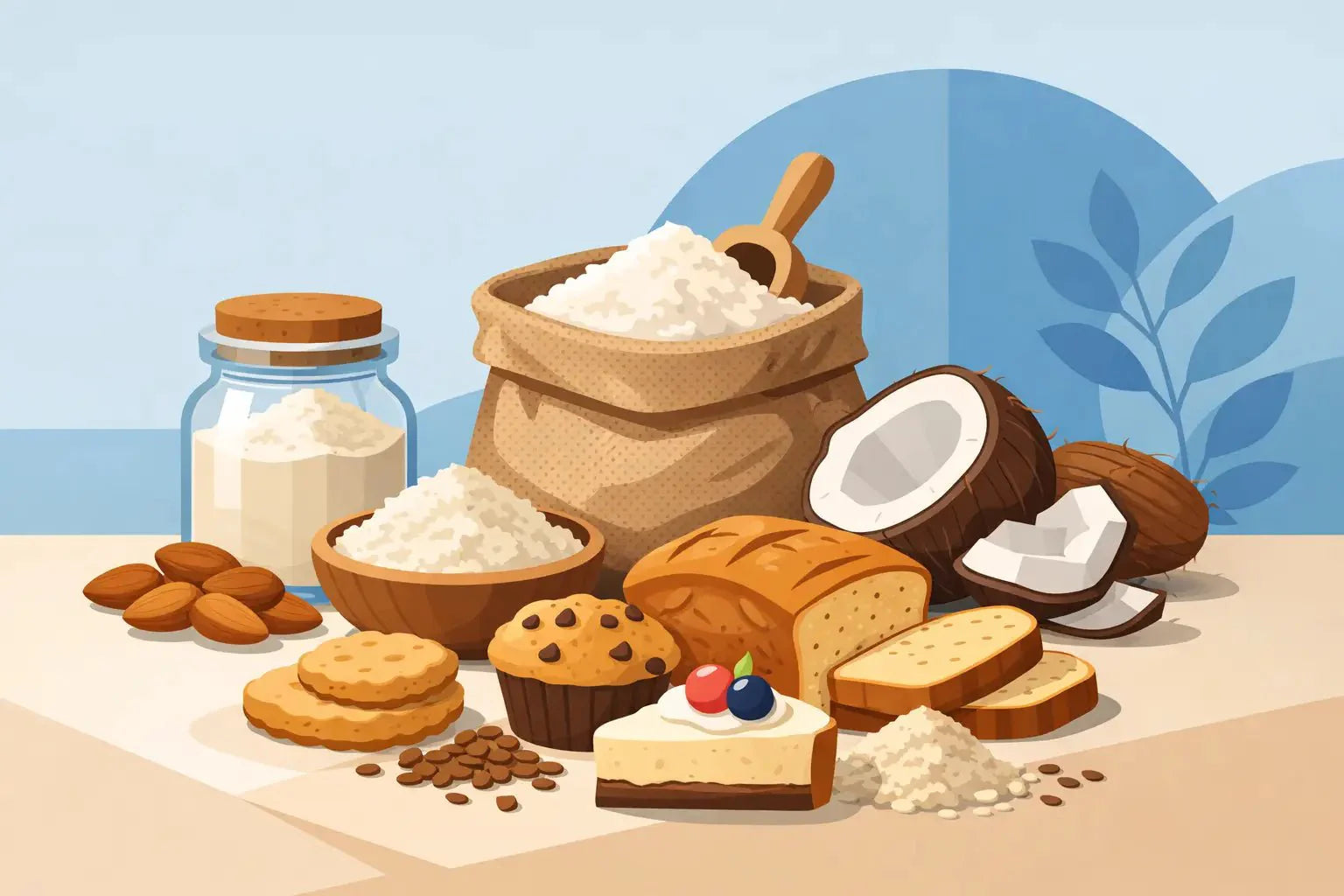
A tray of warm brownies, a weekend loaf or a quick batch of crackers should not be off the menu because you eat low carb. The trick is choosing the best keto flour substitute for the recipe in front of you, rather than expecting one ingredient to behave exactly like wheat flour. Keto flours bring their own texture, flavour and moisture needs - and once you know how to use them, your baking gets far more reliable.
For everyday keto baking, almond flour is usually the easiest place to start. But coconut flour, lupin flour, flax meal and purpose-made low-carb baking blends all have a useful role in the pantry. You are in the right place if you want satisfying bakes without the surprise carb load.
What makes a flour keto-friendly?
Traditional plain flour is high in starch, which is why it creates the familiar structure of bread, cakes and pastries. Keto-friendly alternatives aim to keep net carbohydrates lower while still helping food hold together, rise, crisp or stay tender.
That means there is no single best option for every job. A light sponge needs something different from a chewy cookie, and a savoury pizza base needs a different approach again. The best results usually come from matching the flour to the texture you want, then following a recipe designed for that ingredient.
When comparing products, check the nutrition panel by serving and per 100 grams, particularly if you are tracking net carbs closely. Also look at the ingredient list. Some low-carb flour blends include fibres, thickeners or raising agents, which can be very handy but may affect how a recipe behaves.
The best keto flour substitute for each bake
Almond flour for everyday cakes, biscuits and crumb coatings
Almond flour is made from finely ground blanched almonds. It has a mild, slightly sweet flavour and a soft, moist texture that suits muffins, friands, pancakes, biscuits, cakes and crumbed chicken or fish.
It is the closest all-rounder in many keto kitchens, although it is not a direct cup-for-cup replacement for wheat flour. Almond flour has no gluten, so it needs eggs, cheese, psyllium husk or another binder when structure matters. Choose finely ground almond flour rather than coarser almond meal for smoother cakes and less grainy baking.
Its main trade-off is density. A large almond-flour cake can become heavy if the recipe does not include enough lift from eggs or baking powder. It is also higher in calories because it is nut based, which may matter if you are balancing energy intake alongside carbohydrate goals.
Coconut flour for recipes that need serious absorbency
Coconut flour is finely milled dried coconut. It is exceptionally absorbent, so a little goes a long way. It works beautifully in small cakes, pancakes, wraps, slice bases and recipes where eggs provide most of the structure.
Do not swap it one-for-one with almond or wheat flour. A recipe that uses a cup of almond flour may need only a few tablespoons of coconut flour, plus extra eggs and liquid. Add too much and your bake can turn dry, chalky or crumbly very quickly.
Coconut flour brings a gentle coconut note, although this is often hidden by cocoa, spices, vanilla or savoury seasonings. It is a smart pantry option when you want a lower-fat flour alternative or need a nut-free choice, provided coconut suits your dietary needs.
Lupin flour for higher-protein bread-style baking
Lupin flour is made from sweet lupin beans and deserves more attention from low-carb bakers. It is naturally high in protein and fibre, relatively low in carbohydrates, and can add a more bread-like body to rolls, savoury muffins, pizza bases and seeded loaves.
Its flavour is earthier than almond flour, so it shines in savoury bakes or recipes with herbs, cheese, olives and spices. In sweet baking, it often works best as part of a blend rather than the only flour. If you have a peanut or legume allergy, take extra care and check product advice, as lupin is a recognised allergen.
Flax meal and chia for binding, not bulk
Ground flaxseed and chia flour are not usually the main flour in a cake, but they are incredibly useful supporting players. When mixed with water, they form a gel that helps replace some of the binding normally supplied by gluten.
Flax meal adds a nutty flavour that works well in crackers, seed breads, burger buns and savoury bases. Chia is more neutral and can improve moisture retention in muffins and loaves. Use either in modest quantities, as too much can make baking dense or gummy.
Psyllium husk for stretch and chew
Psyllium husk is technically a fibre rather than flour, but it is one of the most valuable ingredients in keto bread baking. It absorbs water and creates a flexible gel, helping doughs hold their shape and giving buns, wraps and loaves a more familiar chew.
A small amount makes a noticeable difference. The exact grind and brand can affect absorption, so follow the recipe closely and give the dough time to hydrate before deciding it needs more liquid. Psyllium works especially well alongside almond flour, coconut flour or lupin flour.
Low-carb baking blends when convenience matters
A quality keto flour blend takes much of the trial and error out of baking. These mixes may combine nut flours, seed flours, fibres and natural binders to deliver a more predictable texture for cakes, bread or pastry-style bakes.
They are ideal for busy weeks, new keto cooks and anyone who wants a reliable starting point for family favourites. The important part is to use them as directed. A blend designed for bread will not necessarily produce a fluffy vanilla cake, and vice versa. At Yo Keto, shopping by baking ingredient or mix type can make it easier to find an option suited to what you actually want to make.
How to swap flour without wasting a batch
The most useful rule is simple: do not treat keto flours as direct substitutes for plain flour unless the packet or recipe specifically says you can. Their moisture needs are dramatically different.
Start with a keto-specific recipe whenever possible. It has already accounted for the lack of gluten, the absorbency of the flour and the need for extra eggs or binding ingredients. If you are adapting a favourite family recipe, begin with a small batch and change one variable at a time.
For a lighter result, use finely milled flour and bring cold ingredients closer to room temperature before mixing. Whisk dry ingredients thoroughly so baking powder, salt and fibre ingredients are evenly distributed. Then let the batter rest for a few minutes. Coconut flour, psyllium and chia continue absorbing moisture after mixing, and this short pause can prevent overcorrecting with extra flour.
Keto bakes can brown faster than wheat-based ones because of their fat and protein content. Check them early, use baking paper where helpful, and allow cakes or loaves to cool properly before slicing. The structure often sets as the bake cools, especially in breads made with psyllium or flax.
Build a flexible keto baking pantry
If cupboard space is limited, begin with almond flour, coconut flour and psyllium husk. That trio covers a surprising range of cakes, pancakes, crackers, wraps and bread-style recipes. Add lupin flour when you want more protein and a heartier savoury result, then keep a purpose-made baking blend on hand for easy weekend projects.
Sweeteners matter too. Granulated erythritol, monk fruit blends and allulose can each bake differently, particularly when it comes to browning and softness. Choose a sweetener suited to the recipe rather than expecting every sugar-free option to caramelise or cream like regular sugar.
The best keto flour substitute is the one that gives you the result you want while fitting your way of eating. Keep a couple of options in the pantry, bake small when experimenting, and let every successful loaf, biscuit or slice make low-carb living feel a little more like home.