
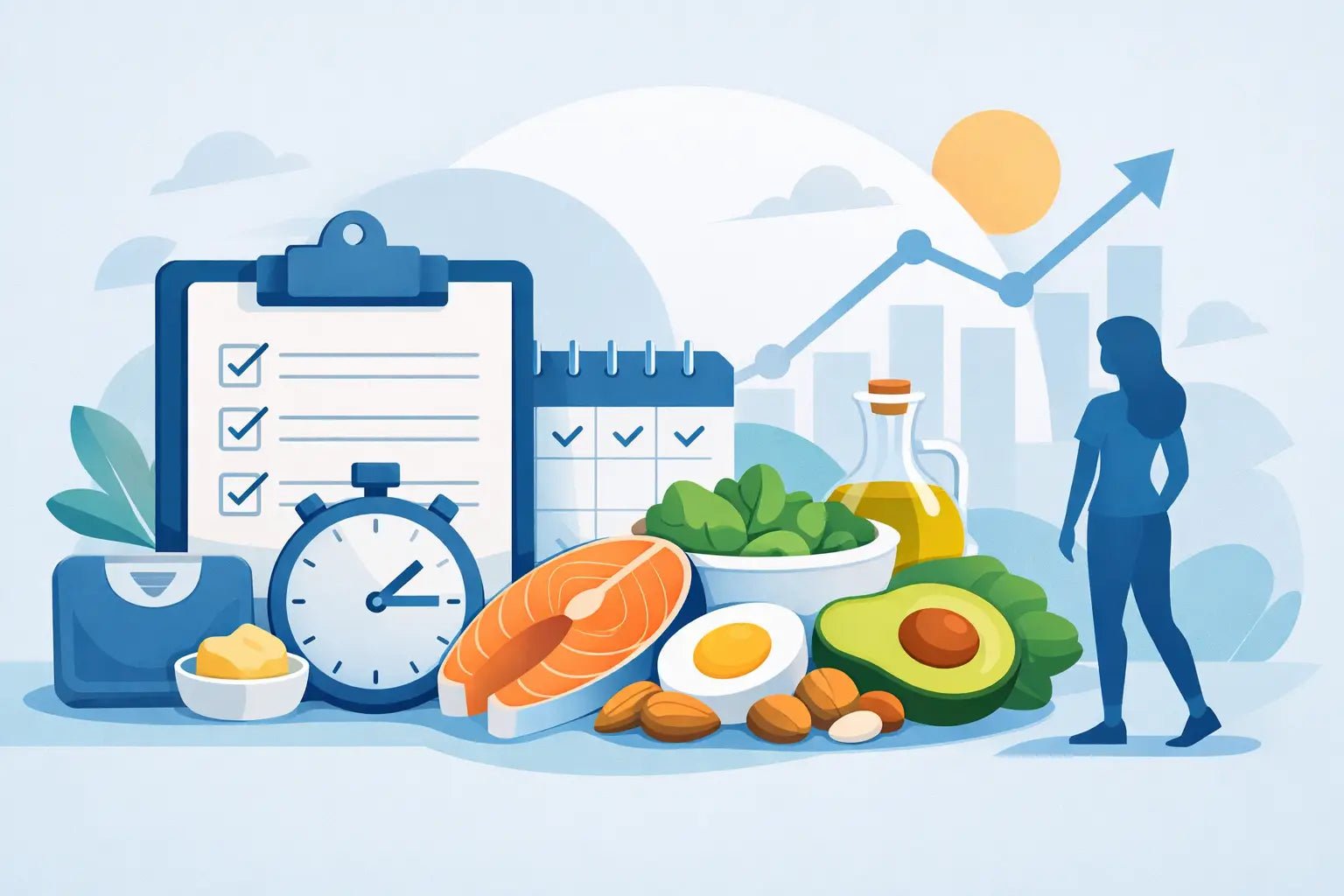
The first supermarket shop is where many keto plans go sideways: a trolley full of salad, chicken and good intentions, but no practical breakfast, snack or sauce options. If you are wondering how to start keto diet without making meals feel restrictive, begin by setting up your kitchen for the food you actually enjoy eating.
Keto is not about surviving on plain eggs and broccoli. Done well, it can include satisfying meals, easy pantry staples and occasional treats that fit your carbohydrate target. The aim is to reduce carbs enough for your body to rely more heavily on fat for fuel, while keeping protein adequate and meals enjoyable.
How to start keto diet without overthinking it
For most beginners, a simple starting point is around 20 to 30 grams of carbohydrate per day. That is low enough for many people to enter nutritional ketosis, though the exact threshold varies with body size, activity, metabolism and individual response. Some people need fewer carbs, while active people can sometimes tolerate more.
Rather than trying to calculate every macro from day one, focus first on removing the major carbohydrate sources: sugar, soft drink, juice, bread, rice, pasta, potatoes, breakfast cereal, biscuits and standard sweets. Then build meals from protein, low-carb vegetables and satisfying fats.
A useful keto plate might look like grilled salmon with leafy greens, avocado and olive oil; a chicken salad with cheese and creamy dressing; or mince cooked with zucchini, mushrooms and a low-sugar sauce. You do not need to add fat to everything simply because keto is high fat. Use enough to make meals filling and tasty, then adjust based on your hunger and goals.
Protein matters, especially if you train, want to preserve muscle or are eating keto for weight management. Include a solid serve of eggs, meat, poultry, fish, tofu or another suitable protein source at each meal. Fat supports fullness and flavour, but protein gives your meals structure.
Understand carbohydrate labels in Australia
Australian nutrition panels can make keto shopping easier once you know what to look for. The carbohydrate line is generally already separate from fibre, so it is often close to what overseas keto guides call net carbs. Check the per-serve and per-100 g columns, because a tiny serving size can make a product look lower in carbs than it really is.
Also watch for sugars, maltodextrin, rice flour, starches and syrups in foods marketed as healthy or sugar-free. Sugar-free does not automatically mean keto-friendly. Some products contain enough starch or certain sweeteners to push carbs up quickly, particularly when you have more than one serve.
Build a keto kitchen you will actually use
Your first shop does not need to be perfect. Start with a small set of flexible ingredients that cover breakfasts, lunches, dinners and the snack moment that usually sends you towards the biscuit tin.
Keep a mix of these practical staples on hand:
- Eggs, Greek yoghurt, cheese, canned tuna, chicken, mince, salmon and other proteins you genuinely like.
- Leafy greens, cauliflower, zucchini, mushrooms, cucumber, broccoli, avocado and other low-carb vegetables.
- Olive oil, butter, ghee, mayonnaise, pesto, olives, nuts and seeds for flavour and fullness.
- Low-carb crackers, keto-friendly chocolate, sugar-free lollies, low-carb baking mixes, sauces and electrolyte options for convenience.
This is where a specialist keto grocery range can be useful. Yo Keto brings together everyday pantry swaps alongside more specific options such as allulose and monk fruit sweeteners, C8 MCT oil, bone broth and ketone testing tools, so you are not hunting across five different shops.
Plan three easy days before you chase variety
For your first few days, repetition is a feature, not a failure. Choose two breakfast options, two lunch options and three dinners. For example, eggs with avocado or full-fat Greek yoghurt with a low-sugar topping can cover breakfast. Leftover dinner, a tuna salad or a chicken-and-mayo lettuce wrap can handle lunch.
Dinner can stay familiar. Swap rice for cauliflower rice, spaghetti for zucchini noodles or a low-carb pasta alternative, and potato mash for buttery cauliflower mash. A steak with salad and garlic butter is already close to keto. So is a roast chicken with greens and a creamy dressing.
You can add more recipes once the basics feel automatic. Starting with elaborate keto baking, unfamiliar ingredients and complicated tracking often creates more friction than results.
Get through the first week comfortably
When carbohydrate intake drops, your body releases stored water and sodium. That is why some people notice a quick change on the scales, followed by headaches, fatigue, cramps, dizziness or irritability. These symptoms are often called keto flu, but they are frequently linked to fluid and electrolyte changes rather than a virus.
Drink water regularly and do not be afraid to salt meals to taste if that suits your health needs. A quality electrolyte product can be handy, particularly in hot Australian weather, during training, while fasting or if you are prone to headaches in the first week. Look for an option without added sugar if you are keeping carbs low.
There is a trade-off here: more electrolytes are not automatically better. If you have high blood pressure, kidney disease, heart concerns, or take medication that affects blood glucose, blood pressure or fluid balance, speak with your GP, pharmacist or accredited practising dietitian before making a major dietary change. Keto also needs individual guidance during pregnancy or breastfeeding, and for anyone with a history of disordered eating.
Keep exercise gentle at first if your energy feels flat. A walk, easy cycle or lighter gym session is usually more realistic than testing a personal best while your body is adapting. Most people find their appetite, energy and training rhythm settle over the following weeks, but there is no prize for pushing through severe symptoms.
Track enough to learn, not enough to obsess
Tracking food for one or two weeks can reveal where carbs are hiding. Milk in coffee, flavoured yoghurt, marinades, cashews, sauces and generous handfuls of nuts can all add up. You may choose to use an app, a written note on your mobile or simply check labels consistently.
Ketone testing is optional. Urine strips can be useful for a basic early indication, while blood meters are generally more precise. Breath testing offers another reusable option. None of these tools can tell you whether your overall diet is nutritious, sustainable or right for your goals, so treat the result as information rather than a scorecard.
Pay attention to practical markers too: Are you less hungry between meals? Is your energy stable? Are you sleeping well? Are your meals satisfying? If you are constantly ravenous, review protein first, then make sure your meals include enough fat and low-carb vegetables.
Make room for real life
Keto works best when it has an answer for busy workdays, family dinners and social occasions. At a café, eggs, bacon, avocado and mushrooms are often an easy choice. At a barbecue, choose grilled meat, salad, cheese and a low-sugar dressing, then skip the bread roll if you need to keep carbs tight. At home, keep a few quick options ready so an exhausting day does not become a reason to abandon the plan.
You do not have to be perfect for keto to be useful. A higher-carb meal may affect your ketones or appetite temporarily, but it does not erase what you have learned. Notice what happened, return to your usual low-carb meals at the next opportunity and keep building a way of eating that feels good enough to repeat.
Start with the next meal, not a flawless version of the next month. A well-stocked fridge, a few reliable swaps and a little patience can make keto feel less like a diet and more like your everyday food routine.