
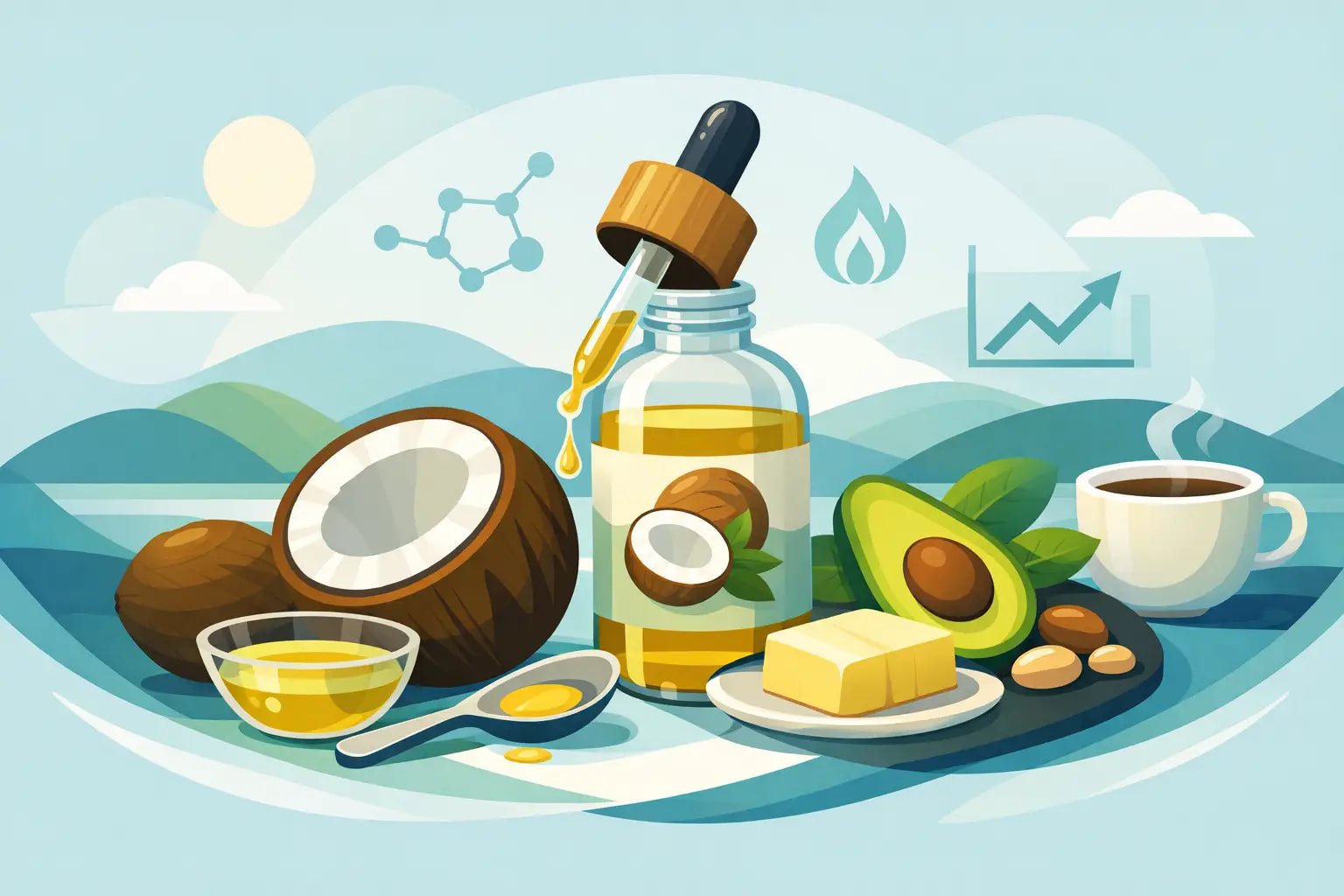
A teaspoon too much can turn a great keto morning into a sprint for the nearest bathroom. That is the unglamorous but useful first lesson in how to use MCT oil: start small, use it consistently, and choose a format that suits the way you already eat. For many keto and low-carb eaters, MCT oil is an easy way to add satisfying fats to coffee, shakes and meals without adding carbohydrate-heavy ingredients.
MCT stands for medium-chain triglycerides, a type of fat that is digested differently from the longer-chain fats in foods such as butter, avocado and olive oil. Your body can absorb MCTs relatively quickly, and the liver can convert some of them into ketones. That makes them popular during keto eating, fasting routines and before training. Still, MCT oil is a supplement to your food routine, not a shortcut around a balanced plate or your overall carbohydrate intake.
What MCT oil actually does
MCT oil is usually made from coconut oil, although the final product is more concentrated than the coconut oil in your pantry. The main MCTs you will see on a label are C8, also called caprylic acid, and C10, or capric acid. Both are useful options, but they are not identical.
C8 is generally the preferred choice for people seeking a faster, more ketone-focused MCT. It is commonly used in black coffee, fasting drinks and performance-focused routines. C10 is also a quality MCT and is often found alongside C8 in blends. It may be a practical, more budget-friendly option for everyday use. Some products include C6, or caproic acid, which can have a sharper taste and is more likely to upset sensitive stomachs. If you are new to MCT oil, a C8 or C8/C10 blend is usually the friendliest place to begin.
The benefit you notice may be steadier energy between meals, better satisfaction from a light breakfast, or simply a smoother way to add fat to your usual keto foods. Results vary. If you are eating more carbohydrates than your personal keto threshold, MCT oil alone will not necessarily put you into nutritional ketosis.
How to use MCT oil every day
The best routine is the one you will actually enjoy. MCT oil has a mild flavour and stays liquid at room temperature, so it is easy to work into cold and warm foods. Avoid treating it like a cooking oil, though. It is better stirred, blended or drizzled in after cooking than used for high-heat frying.
Add it to coffee or tea
Coffee is the classic starting point. Blend MCT oil into hot coffee with butter, ghee or a keto-friendly creamer for a café-style drink with more staying power. Blending matters: it creates a creamy texture rather than leaving a slick layer of oil on top.
Start with one teaspoon, especially if you normally drink coffee on an empty stomach. Once that feels comfortable for several days, you can gradually increase your serving. A coffee with MCT oil may suit a busy morning or a fasting window, but it still contains energy. Whether it fits your fast depends on why you are fasting and what rules you personally follow.
Blend it into a smoothie or protein shake
MCT oil works particularly well in a low-carb protein shake because the blender disperses it properly. Pair it with unsweetened almond milk, ice, a low-carb protein powder and a spoonful of cocoa, cinnamon or nut butter. It is a simple way to make a post-gym shake more filling without reaching for sugary add-ons.
If you use collagen in your routine, MCT oil and collagen can sit neatly in the same shake or hot drink. Just remember that collagen provides protein while MCT oil provides fat. They do different jobs, so your portions should reflect your meal and training needs.
Use it with meals, not just drinks
You do not need to make every serve of MCT oil into a bulletproof coffee. Stir a small amount through a salad dressing with olive oil, lemon juice, mustard and herbs. Add it to a creamy soup after it has come off the heat, or blend it into a sugar-free yoghurt bowl with chia seeds and a few berries.
MCT oil can also make a useful addition to a low-carb breakfast when you are not especially hungry but want something more substantial than a plain coffee. Think eggs with avocado and a side of coffee, rather than relying on oil alone. Whole foods still bring flavour, micronutrients and the satisfaction that makes keto sustainable.
How much MCT oil should you take?
More is not better with MCT oil. Most people do well by beginning with one teaspoon a day. Stay there for three to seven days, then move to two teaspoons if your digestion is comfortable. From there, one tablespoon daily is a common routine, while experienced users may split a larger amount across the day.
Read the product label, as serving sizes differ. Splitting your intake between breakfast and lunch can be easier on the gut than taking a large amount in one hit. It also lets you work out what amount genuinely feels good for you, rather than copying someone else's coffee recipe.
MCT oil is calorie-dense, like any fat. If fat loss is one of your goals, account for it within your overall food intake. Adding several tablespoons on top of meals that are already rich in cheese, cream, butter and nuts may not give the result you expect. Keto is satisfying because it is flexible, not because every meal needs extra fat.
Choose the right MCT oil for your goal
A pure C8 MCT oil is a strong pick for experienced keto followers, people tracking ketones, or anyone who wants a simple addition to coffee and fasting routines. An C8/C10 blend is an excellent everyday option, often with a gentler price point and similarly easy use in drinks and food.
Flavoured MCT products can be handy if plain oil feels a little too neutral, but check the ingredients if you are strict about carbs or prefer to avoid particular sweeteners. MCT powder is another option. It is less messy for travel, can mix well into shakes, and may feel easier to tolerate for some people. The trade-off is that powders often contain carrier ingredients, so the label matters more.
If you are deciding between MCT oil and coconut oil, think about purpose. Coconut oil is a versatile whole-food cooking fat with a distinct flavour and a broader mix of fatty acids. MCT oil is the more concentrated functional option for drinks, cold recipes and targeted keto use.
Avoid the common MCT oil mistakes
The biggest mistake is starting with a full tablespoon because a label says that is one serve. Your digestive system may disagree. Cramping, nausea and loose stools are the usual signs that you have had too much too quickly. Reduce the amount, take it with food, and build up more slowly.
The second is pouring it into a frying pan. MCT oil is not designed for high-heat cooking, so save your butter, ghee, tallow, coconut oil or olive oil for the pan depending on the recipe. Finally, do not expect MCT oil to compensate for a diet full of hidden sugars and refined carbs. It works best as part of a lower-carb routine built around foods you enjoy and can repeat.
Can you take MCT oil while fasting?
You can, but whether you should depends on the kind of fast you are doing. MCT oil may support energy and make a fasting window feel more manageable, which is why some keto eaters add it to black coffee. Technically, however, it provides calories and fat, so it does not suit a strict water-only fast.
For a fasting routine focused on appetite management or staying low carb, it may have a place. For a fast directed by a health professional, or if you are fasting for a specific medical test or procedure, follow the advice you have been given instead.
If you are pregnant, breastfeeding, managing diabetes, have liver or digestive conditions, or take medication that affects blood sugar, check with your doctor or accredited practising dietitian before adding MCT oil regularly. This is especially worthwhile if you are new to keto as well.
Start with the smallest serve that feels good, put it in a drink or meal you genuinely look forward to, and let your routine build from there. A well-made keto coffee, shake or dressing is meant to make your day easier - not turn nutrition into another complicated rule.