
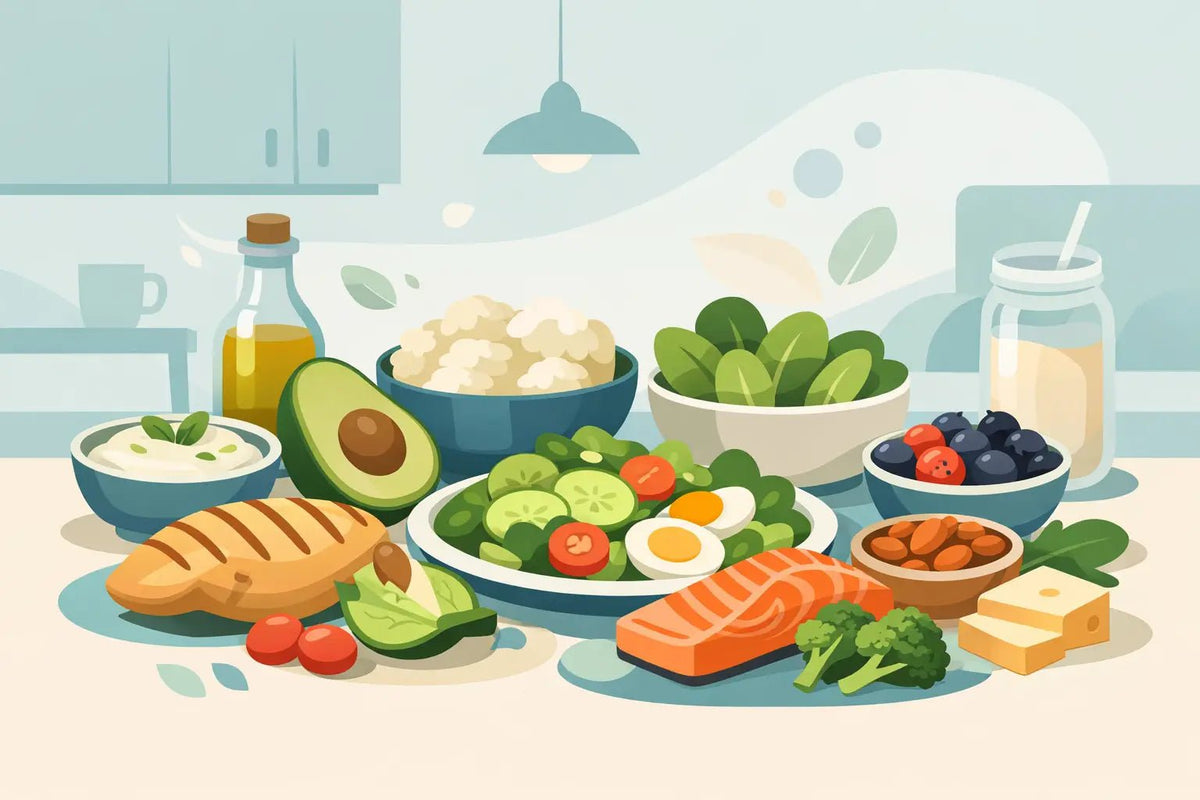
Low carb foods are not limited to plain chicken, steamed veg and saying no to every food ritual you enjoy. With the right pantry, they can look like a proper brekkie, a quick desk lunch, creamy pasta-style dinners, a square of chocolate after tea and snacks that do not leave you rummaging through the cupboard an hour later.
The practical goal is simple: choose foods with less digestible carbohydrate while keeping meals satisfying, flavourful and easy to repeat. Exactly how low you go depends on your approach. Someone following strict keto may track net carbs closely, while an LCHF eater may focus more broadly on reducing sugar and refined starches. You are in the right place either way - a few smart swaps make everyday eating far less complicated.
What counts as low carb foods?
Low carb foods are generally foods that contain little sugar and starch per serve. Whole foods such as eggs, meat, fish, cheese, leafy greens, avocado, olives and nuts naturally fit the bill. Then there are purpose-made alternatives, including low-carb bread mixes, pasta replacements, sugar-free sauces, baking ingredients and snacks.
When comparing packaged options, look beyond bold front-of-pack claims. The nutrition panel tells you how much carbohydrate is in a serving, while the ingredients list helps explain where those carbs come from. Added sugar, rice flour, potato starch, tapioca and maltodextrin can quickly change a product’s carb count, even when it sounds healthy.
In Australia, nutrition panels show total carbohydrate and sugars. Fibre is listed separately. Many keto eaters calculate net carbs by subtracting fibre from total carbohydrates, but it is worth being consistent with the method you use. Some products also contain sugar alcohols or rare sugars, which can affect people differently. If a particular sweetener upsets your stomach or triggers cravings, that matters just as much as the number on the label.
Build meals around naturally low-carb staples
The easiest low-carb meals usually start with a substantial protein, colourful low-starch vegetables and a satisfying fat source. Think eggs with spinach, mushrooms and feta; salmon with broccoli and a lemon-butter sauce; or mince cooked with zucchini, herbs and grated cheese. These are familiar meals, not complicated diet food.
Meat, poultry, seafood and eggs contain virtually no carbohydrate in their plain forms. Choose flavoured, cured or pre-marinated versions more carefully, as marinades and seasonings can contain sugar or starch. Full-fat dairy can work well too, although milk is naturally higher in lactose than cheese, cream or butter. Portion size still counts, particularly with yoghurt and milk-based drinks.
Vegetables bring volume, texture and variety. Leafy greens, cauliflower, zucchini, cucumber, cabbage, asparagus, green beans, mushrooms, broccoli and capsicum are dependable choices. Starchy vegetables such as potato, sweet potato, corn and parsnip are not automatically off limits for every lower-carb approach, but they are easier to overdo if ketosis or a tight carb target is the aim.
Fats help meals feel complete. Extra virgin olive oil, butter, ghee, avocado, olives, coconut cream and animal fats all have a place, depending on your taste and cooking style. The point is not to pour fat into everything without thought. Use enough to make meals enjoyable and filling, while letting hunger, goals and energy needs guide your portions.
Pantry ingredients that earn their shelf space
A well-stocked pantry prevents the 6 pm decision from becoming a takeaway order. Keep a few flexible ingredients on hand and you can turn mince, eggs or leftover roast chicken into something different all week.
Low-carb flours are a good example. Almond meal offers a rich, slightly nutty result for baking and crumb coatings. Coconut flour is very absorbent, so a little goes a long way and recipes need extra liquid or eggs. Flaxseed meal can add fibre and a more rustic texture. None behaves exactly like wheat flour, so use recipes designed for the flour you have rather than swapping cup for cup.
For sweetness, erythritol, stevia, monk fruit and allulose can help preserve favourite baking rituals without regular sugar. They are not interchangeable. Erythritol can have a cooling finish, stevia is potent and can be bitter in excess, monk fruit is usually blended with another ingredient, and allulose browns beautifully but may not be suitable for everyone’s carb-tracking method. Taste and tolerance are useful guides here.
Bone broth, tinned fish, nut butters without added sugar, olives, pickles, stock, herbs, spices and low-sugar condiments also make quick meals more interesting. Check sauces carefully - ketchup, barbecue sauce, teriyaki and sweet chilli sauce can contain more sugar than you expect.
Low carb foods for snacks, lunches and busy days
A snack should solve a real problem: genuine hunger, a long gap between meals, a training session or a road trip. It does not need to be a constant grazing habit. Cheese, boiled eggs, jerky with no added sugar, nuts, pork crackle, olives, tuna and crunchy seed-based crackers can all be useful options.
Nuts are nutrient-dense and convenient, but the carb content varies. Macadamias, pecans and Brazil nuts tend to be lower in carbohydrate than cashews. A small handful is often plenty, especially when nuts are paired with cheese or a sugar-free dip. For sweet cravings, a portioned sugar-free chocolate or low-carb bar can be a far more satisfying choice than trying to ignore the craving until it becomes an all-out snack attack.
Lunch becomes easier when you stop treating sandwiches as the only portable option. Leftover dinner in a container, a salad with chicken and avocado, a grazing box with cheese and veg, or a wrap made with a low-carb alternative can travel well. Keep a few shelf-stable options at work, in the car or in your bag so a busy day does not dictate your food choices.
Smart swaps for foods you miss
Most people do not miss carbohydrates as a nutrient category. They miss toast with eggs, a bowl of pasta, pizza night, biscuits with coffee or something crunchy beside a dip. That is where carefully chosen low-carb replacements can make the lifestyle feel sustainable.
For pasta-style meals, try konjac noodles, zucchini noodles, spaghetti squash or a protein-forward pasta alternative. Konjac is very low in carbs and works best when rinsed thoroughly and tossed through a strongly flavoured sauce. Vegetable noodles offer freshness but are softer and less filling. A higher-protein alternative may have more carbs, yet still fit a less strict low-carb plan. It depends on your target and what makes the meal satisfying enough to repeat.
Bread replacements can be equally varied. Some are designed for toast and sandwiches, while others work better as a side with soup or as a pizza base. Look for a texture and flavour you actually enjoy, then consider the serve size and carb count. A product can be low carb, but doubling the serving because it tastes good changes the maths.
Crackers, chips and savoury snacks are another useful category for entertaining. Seed crackers, cheese crisps and lower-carb chip alternatives can make a platter feel generous rather than restrictive. Add smoked salmon, antipasto, cheese, guacamole or a creamy dip and you have food worth sharing.
Reading labels without overthinking it
Labels matter, but they should not turn grocery shopping into a research project. Start with carbohydrate per serve, then check whether the stated serving is realistic. A tiny serve can make a product appear lower carb than the amount most people would eat.
Next, scan the ingredients for hidden starches and sugars. Finally, consider how the food fits your day. A low-carb sauce used by the tablespoon is different from a snack you might eat straight from the packet. Context beats perfection.
Be mindful of digestive tolerance too. High-fibre products, sugar alcohols and some keto snacks can be brilliant for one person and uncomfortable for another. Introduce new products gradually, drink enough water and keep meals based on whole foods as well as convenient replacements.
Make your low-carb routine enjoyable
The most useful low-carb foods are the ones you will genuinely keep buying, cooking and eating. Start with a few dependable breakfasts, two easy lunches, several dinner foundations and treats that feel worth having. Then build from there.
Yo Keto makes this kind of shop easier by bringing pantry swaps, snacks, baking essentials, sauces and functional favourites into one place, whether you are restocking for the week or trying something new. Choose options that suit your carb target, your budget and your real life. A low-carb way of eating works best when your cupboard gives you choices you look forward to using.