
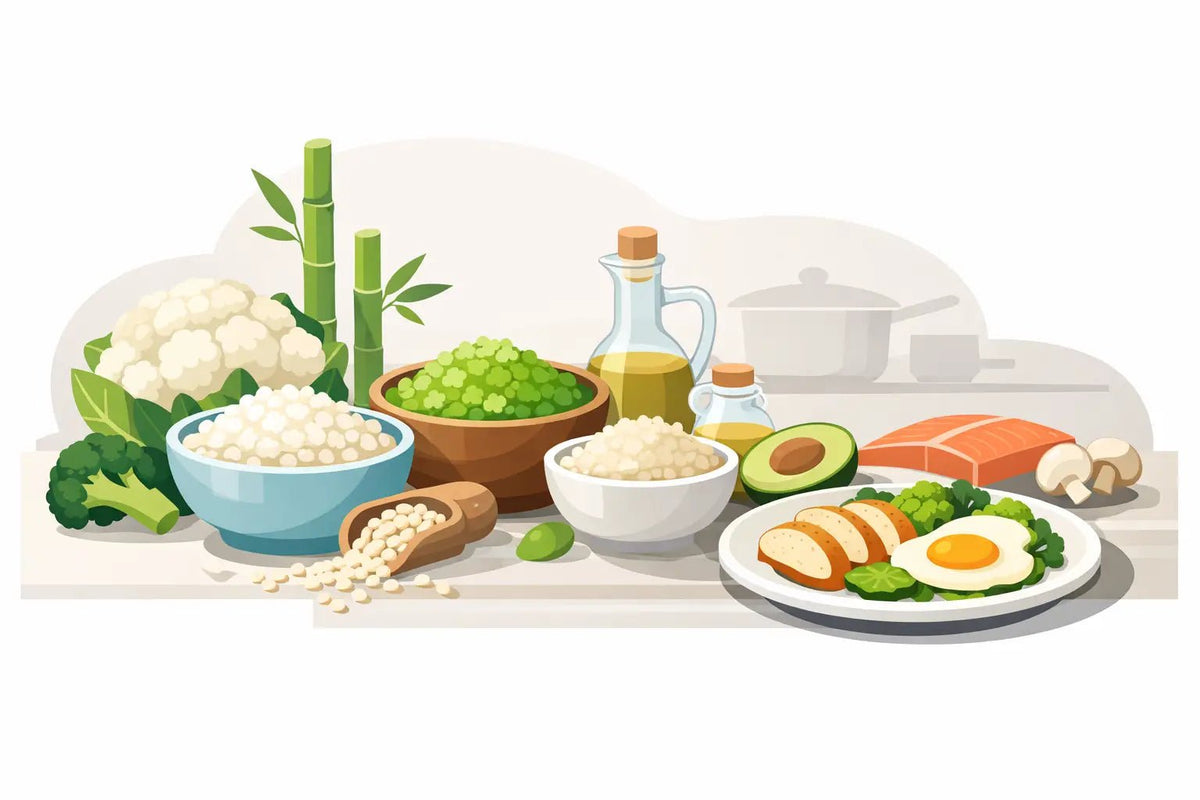
A saucy curry, a quick fried rice or a taco bowl can feel incomplete without something to catch every delicious bit. This low carb rice guide is here to prove you do not need to give up those meals to keep carbs in check. You simply need the right rice-style base for the dish, plus a few cooking habits that make it genuinely satisfying.
For keto and low-carb eaters, regular white, brown and jasmine rice are usually difficult to fit in. They are nutritious foods in their own context, but they are concentrated sources of carbohydrate. A modest cooked serve can take up most, or all, of a strict keto carbohydrate budget before you have added the curry, sauce or toppings.
The good news is that low-carb alternatives are not all trying to be the same thing. Some are light and vegetable-forward, some are neutral and filling, and some are best used when you want the look and ritual of a rice bowl without the starch. You are in the right place to find the option that suits the meal in front of you.
Why regular rice is tricky on keto
Rice is mostly starch. Cooking changes its texture and volume, but it does not make it low carb. Exact values vary by variety and serving size, yet cooked rice commonly provides around 25 to 30 grams of carbohydrate per 100 grams. That can work for a higher-carb eating pattern, but it leaves little room for the colourful vegetables, dairy, sauces and whole-food ingredients that make keto meals enjoyable.
Brown rice is often presented as the more wholesome choice because it retains more fibre and micronutrients than white rice. For carbohydrate control, though, the difference is smaller than many people expect. It is still a grain-based, high-starch food.
This is why checking the nutrition panel matters more than trusting front-of-pack language. Terms such as “healthy”, “natural” or “wholegrain” do not automatically mean keto-friendly. Compare carbohydrate per serve and per 100 grams, then think about how much you will realistically eat. In Australia, nutrition panels list carbohydrate separately from fibre, which makes label reading more straightforward.
Low carb rice guide: choose by meal, not hype
The best alternative depends on whether you are building a fresh salad, soaking up a rich sauce, packing lunches or feeding people who are still warming to vegetable swaps. Texture matters. So does prep time.
Cauliflower rice for everyday versatility
Cauliflower rice is simply cauliflower chopped or grated into rice-sized pieces. It is a popular staple because it has a mild flavour, works with almost any seasoning and provides a much lower-carbohydrate base than grain rice.
It shines in Mexican-style bowls, curries, fried rice, cottage pie fillings and alongside grilled meats. Frozen cauliflower rice is especially useful on busy nights because it removes the chopping and keeps well in the freezer. Fresh cauliflower rice can be a touch firmer and is a great option when you want more bite.
The common mistake is overcooking it. A few minutes in a hot pan is usually enough. Cook it uncovered so steam can escape, season confidently with salt, pepper, garlic, herbs or spices, and finish with butter, olive oil or a spoonful of coconut cream for a fuller mouthfeel. If it becomes watery, it is not ruined - simply keep it in the pan a little longer to cook off the moisture.
Konjac rice when you want a neutral, filling base
Konjac rice is made from the fibre-rich konjac plant, often called glucomannan. It is very low in digestible carbohydrate and typically very low in calories, making it a practical pantry choice for people following keto, low-carb or calorie-conscious plans.
Its texture is different from fluffy basmati or jasmine rice. Think springy, slightly chewy grains rather than soft starch. That makes it particularly good in strongly flavoured dishes: laksa-inspired bowls, satay chicken, curries, stir-fries and saucy mince dishes. The sauce is doing plenty of the flavour work, while konjac provides bulk and a rice-like eating experience.
Preparation makes a real difference. Drain and rinse it well, then dry-fry it in a hot pan for a few minutes before adding oil, seasonings or sauce. This helps remove excess moisture and improves the texture. If you are new to konjac, start by mixing it with cauliflower rice or finely chopped vegetables. You still get the generous bowl, with a more familiar result.
Because konjac is high in fibre, introduce it gradually if your usual fibre intake is low. Drink adequate water and pay attention to how you feel. More is not always better, especially when you are also increasing low-carb vegetables, seeds and fibre supplements.
Broccoli rice for savoury, hearty dishes
Broccoli rice has a stronger flavour than cauliflower rice, but that is exactly why some meals benefit from it. It brings a greener, earthier note to cheesy bakes, lemon-herb chicken bowls, creamy mushroom dishes and meals with beef, lamb or sausage.
Use the stalk as well as the florets to reduce waste and create a finer rice-like texture. A short sauté keeps the colour bright and the pieces pleasantly firm. Broccoli rice can feel more substantial than cauliflower, so it is a smart choice when you want a vegetable-forward meal that does not feel like an afterthought.
Cabbage rice for budget-friendly crunch
Finely chopped cabbage is an underrated rice substitute. It is affordable, easy to find and ideal for high-heat cooking. When sautéed quickly with sesame oil, ginger, garlic, tamari and protein, it creates a satisfying fried-rice-style base with a little crunch.
Cabbage is not neutral, and it does soften as it cooks, so it will not suit every dish. It is excellent with Asian-inspired flavours, smoky barbecue meats and spicy mince, but cauliflower or konjac may be a better match for a delicate curry. This is one of those useful trade-offs: the least expensive option is not always the closest rice replica, but it can be the tastiest choice for the right recipe.
How to make low-carb rice meals more satisfying
A rice alternative is only one part of the plate. The meals that keep you satisfied usually combine a protein source, a flavourful fat, low-starch vegetables and enough seasoning to make the dish feel complete.
For a curry bowl, try cauliflower or konjac rice with chicken, beef, tofu or prawns, then add a full-fat coconut-based sauce and fresh herbs. For fried rice, use cauliflower, broccoli or cabbage with eggs, bacon, chicken or leftover roast meat. A taco bowl becomes a proper dinner with seasoned mince, avocado, cheese, salsa without added sugar and a dollop of sour cream.
Do not be shy with texture either. Crispy shallots may not suit every carb target, but toasted seeds, crushed pork crackling, chopped nuts, fresh cucumber, herbs and grated cheese can all add contrast without relying on grains. A squeeze of lime or a spoonful of chilli sauce can make a simple meal feel far more exciting.
If you are meal prepping, cook your rice alternative separately from wet sauces where possible. Cauliflower and broccoli rice can release water in the fridge, so let them cool before sealing containers and reheat uncovered or loosely covered. Konjac rice tends to hold up well for several days once drained and cooked, which makes it handy for quick work lunches.
What about low-carb packaged rice?
Convenient shelf-stable and ready-to-heat options can be brilliant when life is busy. They are worth keeping for nights when the alternative is takeaway or skipping dinner because nothing is ready. Still, ingredient lists vary widely.
Look beyond the headline claim. Check the carbohydrate figure, serving size and ingredients, especially if you avoid particular fibres, additives or soy-based ingredients. Some products are based on konjac, while others blend vegetables, pulses or grains. A product can be lower in carbohydrate than regular rice without being suitable for your personal keto target.
It also helps to consider the job you need it to do. For strict keto, a very low-carb konjac option may be the best fit. For relaxed low-carb eating, cauliflower blends or vegetable-based options may offer the flavour and texture you prefer. There is no prize for choosing the most restrictive option if it leaves you unsatisfied and reaching for snacks later.
A simple way to build your first swap
Start with a meal you already love rather than attempting a complete kitchen overhaul. Make your usual curry, bolognese-style mince bowl or stir-fry, then replace half the regular rice with cauliflower rice. Next time, go fully low carb or try konjac for comparison. Season generously, include protein and fat, and judge the meal by how it tastes and how satisfied you feel afterwards.
Keto eating works best when favourite food rituals are adapted, not endlessly mourned. Keep a couple of low-carb rice options in the freezer or pantry, and a comforting bowl can stay firmly on the menu whenever you need it.