
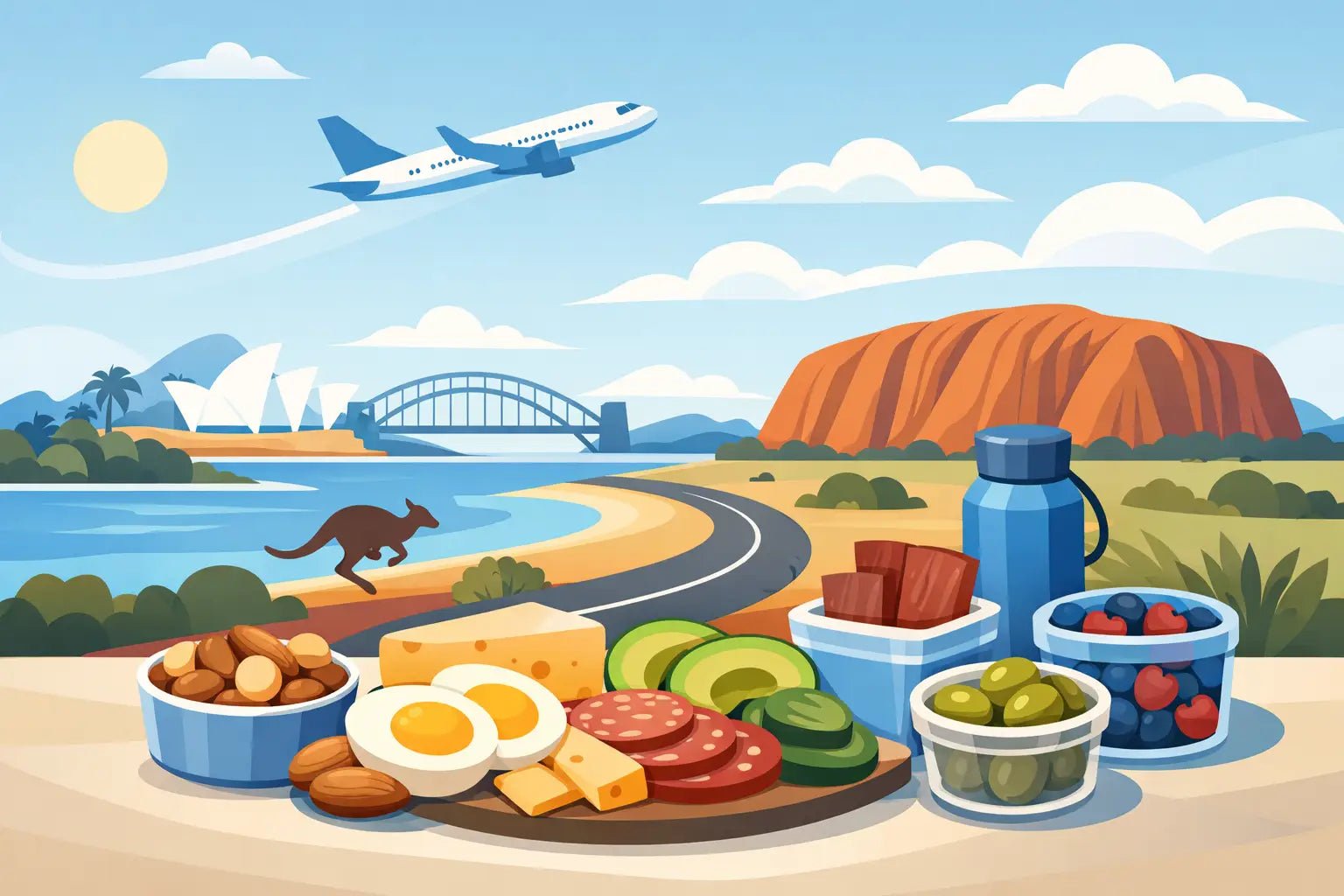
A servo stop with a petrol-station pie warmer is not the moment you want to be reading tiny nutrition panels while hungry. The best keto travel snacks are the ones you genuinely enjoy, can carry without fuss and know will keep your carbs where you want them - whether you are driving up the coast, flying interstate or facing a long day between meetings.
For keto, low-carb and LCHF eaters, travel food is less about finding one perfect snack and more about building a small, reliable stash. Think satisfying fats, enough protein to hold you over, sensible portions and labels you can trust. You are in the right place to make travel days feel just as easy as eating at home.
What makes a good keto travel snack?
The practical answer is simple: choose snacks that are shelf-stable, compact and low in digestible carbohydrates. But the best option depends on the trip. A short flight calls for quiet, tidy food that does not need chilling. A road trip gives you more room for a cooler bag. For hiking or a full workday, protein and electrolytes may matter more than a sweet treat.
Check the nutrition panel rather than relying on front-of-pack claims. In Australia, the carbohydrate figure on the label generally already excludes fibre, so it is usually the number keto eaters use for tracking. Look at the serving size too. A snack may fit your targets per serve, but a small packet can contain two or three serves.
Ingredients deserve a quick scan as well. Sugar, rice syrup, tapioca starch and maltodextrin can add up fast. Some low-carb products use sweeteners such as erythritol, stevia, monk fruit or allulose. These can suit many people, although tolerance varies. Maltitol is worth approaching carefully, as it can affect blood glucose more than many keto-friendly sweeteners and may cause digestive discomfort on a long drive.
15 best keto travel snacks to pack
1. Beef jerky, biltong or meat sticks
Protein-rich meat snacks are a classic travel choice because they are compact, filling and easy to stash in a glovebox or carry-on. Choose varieties without added sugar, honey, fruit juice or sugary marinades. Biltong is often a particularly handy option, but the label still has the final say.
2. Pork crackle
Pork crackle brings the crunch when a packet of crisps is calling your name. It is light, shelf-stable and usually very low in carbs, although flavours can introduce sugar or starch. Pair it with a cheese portion or a few olives if you want a more substantial snack break.
3. Nuts in measured portions
Macadamias, pecans, Brazil nuts and almonds travel brilliantly. Macadamias are especially keto-friendly thanks to their higher fat and lower carb profile, while almonds offer a little more protein. Pre-portion nuts into small containers or bags - eating straight from a family-size bag can turn a snack into an accidental meal.
4. Nut butter sachets
Single-serve almond, macadamia or peanut butter sachets are useful on flights, at the office or when you need something more satisfying than a handful of nuts. They can be eaten straight from the sachet or spread over low-carb crackers. Just remember that airport security may classify larger nut butter packs as liquids or gels, so small portions are the safer bet for carry-on luggage.
5. Low-carb protein bars
A good low-carb protein bar is one of the most convenient travel backups available. It can live in your bag for weeks and is far more filling than a standard snack bar. Compare carbohydrate figures between brands and consider how the bar is sweetened, especially if you are sensitive to particular sugar alcohols.
6. Keto chocolate
Travel does not mean giving up a square or two of chocolate after dinner. Sugar-free chocolate sweetened with suitable alternatives can satisfy that ritual without the usual sugar hit. In warm Australian weather, keep it in an insulated pouch or away from direct sun - melted chocolate in the centre console is nobody’s idea of a treat.
7. Cheese crisps and baked cheese snacks
Cheese crisps deliver a savoury, crunchy snack with protein and fat, without the potato-based carbs of conventional chips. They are ideal for flights and road trips because they do not need a fridge before opening. A little crushed cheese crisp debris in the bottom of the bag is normal, so pack napkins if you are eating in the car.
8. Low-carb crackers
Low-carb crackers make snack time feel more like a proper plate. They work well with shelf-stable cheese portions, nut butter or a small tin of fish. As recipes vary widely, check for ingredients such as wheat flour, rice flour and starches if you are aiming for a tighter keto approach.
9. Tinned tuna, salmon or sardines
A pull-tab tin or pouch of fish can be a surprisingly useful emergency meal, particularly for road trips and camping. It provides serious protein without relying on a service-station sandwich. Choose plain fish or options packed in olive oil, and save strongly scented varieties for outdoors rather than a crowded train carriage.
10. Olive snack packs
Single-serve olives are salty, satisfying and easy to eat on the go. They also make a welcome change from dry snacks. Their brine can leak if the pack is damaged, so keep them in a zip pouch and avoid throwing them loose into a handbag.
11. Seaweed snacks
Roasted seaweed sheets are light, salty and very low in carbs. They will not keep you full on their own, but they are a handy crunchy sidekick alongside jerky, cheese crisps or nuts. They are particularly useful when you are craving something crisp rather than actually needing a large snack.
12. Keto cookies and snack bites
A low-sugar cookie or keto snack bite can make travel feel more relaxed, especially when everyone else has stopped for bakery treats. These are best treated as an intentional snack rather than an unlimited free food. Recipes differ, and some contain more carbs per serve than you might expect.
13. Bone broth sachets
For colder trips, fasting days or appetite-curbing afternoon slumps, a bone broth sachet is worth its place in your bag. All you need is hot water. It offers a savoury alternative to coffee and can be particularly comforting after a long flight or early morning drive.
14. Electrolyte sachets or tablets
Electrolytes are not a snack in the usual sense, but they can be the difference between feeling steady and feeling flat on the road. Keto eating can increase fluid and sodium loss, while travel often means more coffee, less water and disrupted meals. Choose sugar-free electrolytes suited to your routine, then keep a bottle of water within reach.
15. MCT sachets or powdered MCT
For experienced keto eaters, portable MCT can add satisfying fats to coffee or a shake when proper food is not available. C8 MCT is popular for quick ketone support, while C6/C8/C10 blends vary in composition and tolerance. Start conservatively if you are new to MCT oil - a travel day is not the ideal time to discover your personal comfort limit.
Build a travel snack kit around your trip
A little planning beats packing every low-carb snack in the pantry. For a day trip, combine a protein option, a crunchy option, something sweet and an electrolyte sachet. For example, jerky, macadamias, cheese crisps, keto chocolate and electrolytes cover several cravings without taking much room.
For longer drives, bring a cooler bag with ice bricks. This opens up more filling choices such as boiled eggs, cheese, cooked chicken, celery sticks and dip. Keep chilled food separate from your shelf-stable stash, and do not leave it in a hot car while you stop for a long walk or lunch.
Flying requires a little more thought. Solid snacks are usually the simplest choice, while spreads, sauces, nut butter and oils may be subject to airport liquid restrictions. Pack enough food for delays, but be mindful of where you are travelling. Australia’s biosecurity rules can affect fresh produce and other foods when travelling between some states and territories, so shelf-stable packaged snacks are often the easiest option.
Avoid the hungry-traveller trap
The hardest part of keto travel is usually not a lack of options. It is getting too hungry before you look for them. Once that happens, a sugary iced coffee or a packet of chips can seem far more tempting than it would at home.
Eat a proper meal before leaving when you can, keep your snacks somewhere accessible and do not forget fluids. If you track ketones, a blood, breath or urine ketone test can also help you understand how different travel snacks work for your body, rather than relying on marketing claims alone.
A well-packed snack kit gives you choices when the food court does not. Keep a few favourites ready in your bag, car or desk drawer, rotate them before they expire and let your next trip be about the destination - not the carb count at the servo.