
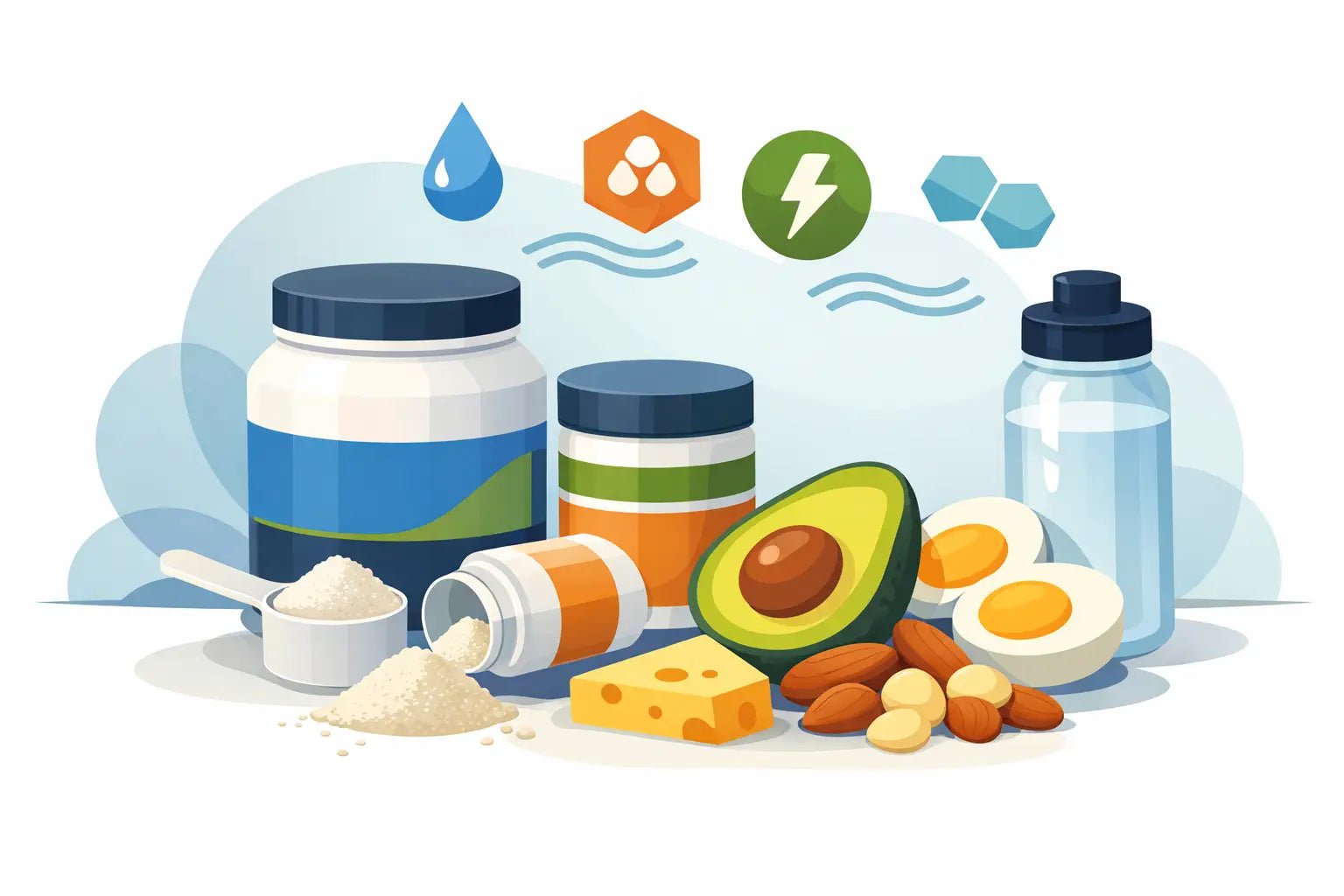
A flat workout, a nagging headache or that oddly drained feeling a few days into low carb can have a simple explanation: your usual hydration habits may no longer match how you are eating. Keto electrolyte powders are a convenient way to add key minerals to water without adding the sugar found in many sports drinks.
They are not a magic fix, and they are not essential for every person on keto every day. But when you are reducing carbohydrates, fasting, sweating through an Aussie summer or training hard, an electrolyte mix can be a practical pantry staple. The right one should fit your ingredients, flavour preferences and routine - not just carry a keto label.
Why electrolytes can feel different on keto
When carbohydrate intake drops, insulin levels generally drop too. This changes the way the kidneys handle sodium, with more sodium and water often being excreted. Glycogen also holds water, so using up stored glycogen can bring a noticeable early shift in fluid balance.
That is why the first week or two of keto can feel a little ordinary for some people. Fatigue, light-headedness, headaches, muscle cramps and a lacklustre training session are often bundled together as the “keto flu”. The phrase is broad, though. Poor sleep, not eating enough, illness, intense exercise and simply not drinking enough fluids can all feel similar.
Electrolytes are minerals that help regulate fluid balance, nerve signalling and muscle function. The three that matter most in keto electrolyte powders are sodium, potassium and magnesium. Calcium may appear too, but it is usually not the main reason people choose an electrolyte product.
The useful distinction is this: hydration is not only about water. If you are drinking litres of plain water while losing more sodium through urine or sweat, you may still feel off. Adding an appropriate electrolyte drink can be helpful, especially around exercise, fasting or hot weather.
What to look for in keto electrolyte powders
A keto-friendly powder should be low in digestible carbohydrates and free from added sugar where possible. That does not mean every flavoured option must be completely carbohydrate-free, but the nutrition panel should make sense within your own daily carb target.
Start with sodium, not just magnesium
Sodium is frequently the headline mineral for low-carb eaters, yet many products position themselves as magnesium supplements with a sprinkle of electrolytes. Magnesium has a role, but a very low-sodium formula may not be the best match for someone who is sweating heavily or navigating the early stages of keto.
Check the amount of sodium per serve, then consider how and when you will use it. A lightly flavoured everyday blend can suit regular sipping. A higher-sodium option may be more useful for endurance training, sauna sessions, physical work outdoors or fasting days. More is not automatically better, particularly if you have been advised to limit sodium.
Check potassium and magnesium forms
Potassium works alongside sodium to support normal fluid balance and muscle function. It is an important nutrient, but high-dose potassium supplements are not suitable for everyone, which is one reason many powders provide moderate amounts rather than huge serves. Whole foods still matter here: leafy greens, avocado, meat, fish, nuts and seeds can all contribute depending on your keto approach.
Magnesium is commonly included in forms such as magnesium citrate, glycinate or bisglycinate. The form can affect tolerance. Citrate may be useful for some people but can be a little too effective on the digestive system in larger amounts. Glycinate and bisglycinate are often chosen by people wanting a gentler option, although individual responses vary.
Do not assume a large number on the front label tells the whole story. Look for the amount of elemental magnesium, the listed mineral forms and the recommended number of serves per day.
Look beyond the front label for hidden carbs
Some hydration powders are designed for high-intensity sport and include glucose, maltodextrin, dextrose or other fast carbohydrates. That may be appropriate in a different nutrition context, but it is usually not what a keto shopper is after.
Also look at flavouring and sweeteners. Stevia and monk fruit are familiar choices for many keto households. Allulose may also work well for those who tolerate it. Sugar alcohols can be low carb, but some people find certain types cause bloating or digestive discomfort, especially when used in a drink more than once a day.
Unflavoured powders are worth considering if you dislike sweetness, prefer to mix electrolytes into sparkling water or bone broth, or want full control over flavour. Flavoured options are often easier to keep using consistently, which counts for a lot when plain water is not appealing.
Match the powder to your routine
The best electrolyte powder is the one you will actually use at the times it helps. Rather than chasing the biggest tub or the strongest flavour, think about where it belongs in your day.
For everyday keto, a low-carb blend in a water bottle can make it easier to stay on top of fluids between meals. If you are new to keto, start with the serving suggestion on the pack and assess how you feel rather than doubling up straight away.
For training, consider the length, intensity and conditions of your session. A gentle morning walk does not place the same demands on the body as a long ride, a gym session in a warm shed or a weekend hike. Mixing a serve before training, sipping during the session or having it afterwards can all work. The right timing is the one that sits comfortably and supports your routine.
For fasting, ingredients become especially relevant. Many people prefer fasting electrolytes with no sugar, calories or flavours that increase cravings. Others find a flavoured electrolyte drink helps them comfortably extend the gap between meals. There is no single rule, but reading the label lets you choose according to the type of fast you are following.
For hot days, travelling and busy work shifts, keep a few serves handy. Dehydration can creep up when you are on the road, at the beach, working on your feet or simply forgetting to refill your bottle. Powder sachets are particularly handy when cupboard space is tight or you want an easy option in your bag.
Powder, tablets or ready-to-drink options?
Powders are popular because they tend to offer flexible serving sizes, a broader mineral profile and better value per serve than ready-to-drink products. They also make it easy to adjust water volume. More water creates a lighter drink; less water delivers a stronger flavour and mineral hit.
Tablets can be tidy and portable, but they may provide lower mineral amounts per serve and can be fizzy or heavily flavoured. Ready-to-drink options win on convenience but create more packaging and can cost more over time. If you use electrolytes occasionally, convenience may matter most. If they are part of your daily keto routine, a tub or bulk format often makes better sense.
A few safety checks worth making
Electrolytes are familiar nutrients, but supplements are not one-size-fits-all. Speak with your GP, pharmacist or accredited practising dietitian before using electrolyte products regularly if you have kidney disease, heart disease, high blood pressure, diabetes, are pregnant or breastfeeding, or take medicines that affect fluid balance, potassium or blood pressure. This includes diuretics and some blood pressure medications.
It is also wise to avoid treating persistent symptoms as an electrolyte issue. Severe headache, ongoing dizziness, fainting, chest symptoms, unusual weakness, vomiting or confusion need medical attention. A scoop of powder is useful for hydration support, not a substitute for proper care.
Make your electrolyte habit easy to keep
Keep your chosen powder where you will see it: beside your water bottle, with your morning coffee supplies or in the drawer with your training gear. Start with one reliable moment in the day, such as after a walk or during the afternoon slump, rather than trying to overhaul every drink at once.
At Yo Keto, the useful part is having keto-friendly hydration options alongside the everyday low-carb foods that make the lifestyle enjoyable. Whether you prefer a clean unflavoured mineral mix, a punchy fruity blend or a fasting-focused formula, you are in the right place to choose based on ingredients rather than guesswork.
A good electrolyte powder should make low-carb living feel easier, not more complicated. Read the label, consider your sodium needs, choose a flavour you genuinely enjoy, and let it earn a regular spot in the routine you already have.