
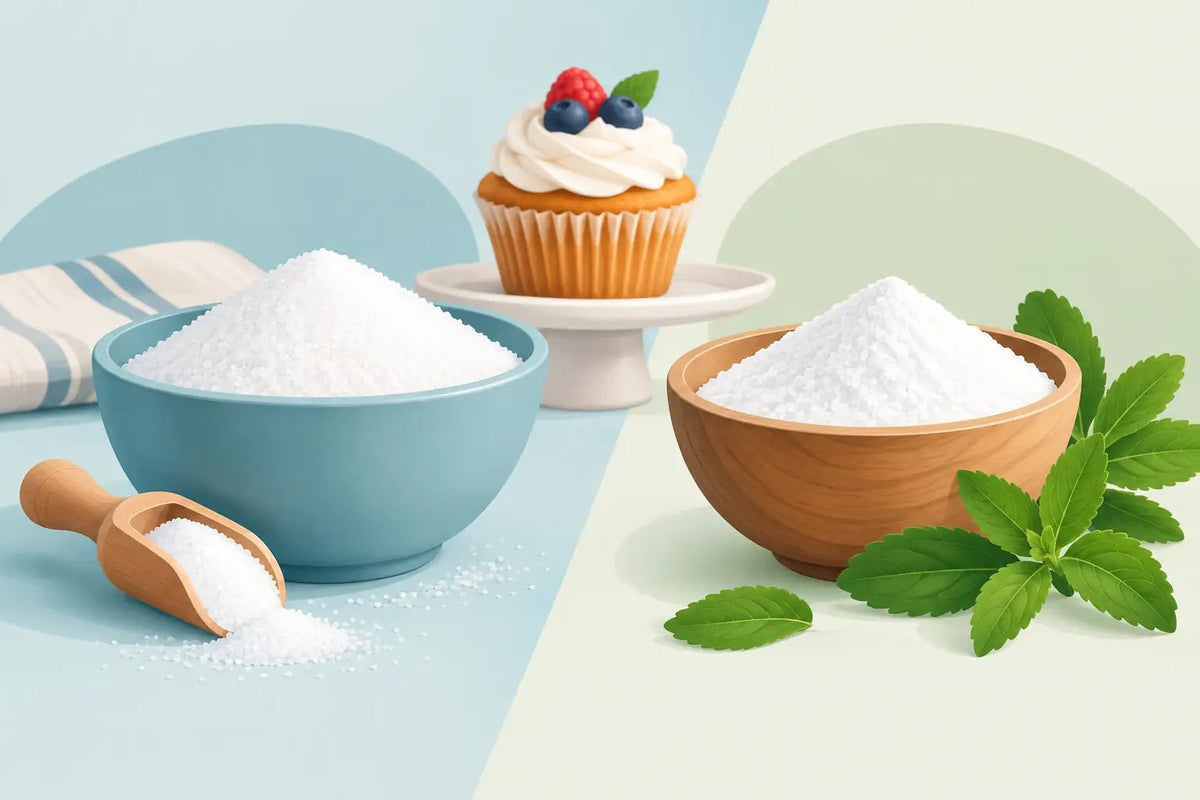
A batch of keto cookies can look perfect, smell brilliant and still disappoint at the first bite. Often, the recipe is not the problem - the sweetener is. With erythritol versus stevia for baking, the best choice comes down to more than sweetness. You need to consider bulk, texture, browning, aftertaste and the kind of treat you are making.
For low-carb and sugar-free bakers, both sweeteners have a place in the pantry. They are useful alternatives to sugar, but they behave very differently once heat, butter, eggs and almond flour enter the picture. If you want satisfying baking without the sugar hit, you’re in the right place.
Erythritol versus stevia for baking: the core difference
Erythritol is a sugar alcohol that looks and measures much more like sugar than stevia does. It is usually around 60 to 70 per cent as sweet as regular sugar, so many recipes use it in a one-to-one style blend or combine it with another high-intensity sweetener. It contributes physical volume to a batter or dough, which is a big deal in baking.
Stevia is a highly concentrated sweetener extracted from the leaves of the stevia plant. Depending on the product, it can be hundreds of times sweeter than sugar. A tiny amount goes a long way. That makes stevia handy for sweetening drinks, yoghurt, whipped cream and no-bake fillings, but it cannot replace a cup of sugar on its own and deliver the same structure.
In simple terms, erythritol helps replace sugar’s bulk, while stevia mainly replaces its sweetness. Most successful low-carb baking recipes need both jobs covered.
When erythritol is the better pick
Erythritol is generally the more practical starting point for recipes where sugar would normally provide body. Think biscuits, muffins, slices, cakes and crumb toppings. Granulated erythritol gives dry ingredients something to hold onto, while powdered erythritol blends more smoothly into batters, frostings and cheesecake fillings.
It is also a useful option when you want a familiar measuring routine. If a recipe calls for a granulated keto sweetener, erythritol-based blends are often designed to pour, scoop and measure similarly to sugar. Always check the pack, though. Some blends include stevia, monk fruit or other ingredients to increase sweetness, so their conversion can vary.
The catch is erythritol’s cooling sensation. It dissolves by drawing heat from your mouth, which can create a cool or minty effect, especially in high-sweetener recipes such as fudge, icing or dense chocolate. It is not harmful, but some people notice it more than others.
Erythritol can also recrystallise as baked goods cool. That is why a cheesecake may taste silky from the oven but slightly gritty after a night in the fridge. Choosing a powdered form, dissolving it well in warm liquid, or using a sweetener blend can help reduce this effect.
Best uses for erythritol
Erythritol is at its best in recipes where texture matters almost as much as flavour. It suits butter biscuits, shortbread-style doughs, muffins, cakes, baked cheesecake, crumble toppings and chocolate baking. For a crisp biscuit, granulated erythritol can work nicely. For smooth ganache or cream cheese icing, powdered erythritol is usually the better call.
Do not expect it to caramelise like table sugar. It may brown a little depending on the full recipe, but it will not create the same deep caramel, sticky toffee or chewy syrupy finish. For those recipes, a different low-carb sweetener approach is often needed.
When stevia makes more sense
Stevia shines when you need sweetness without added volume. A few drops or a small pinch can lift a lemon filling, vanilla cream, mousse, protein ball mixture or berry sauce without making the recipe dry or grainy.
It is particularly useful when another ingredient is already doing the bulking work. For example, a rich baked custard gets its body from eggs and cream. A chia pudding thickens through chia seeds. A protein smoothie gets volume from ice, yoghurt or milk. In these recipes, stevia can be a tidy, low-carb fit.
The main challenge is flavour. Some stevia products have a bitter, liquorice-like or lingering herbal note, especially when used heavily. This varies from one brand and blend to another, and it is more noticeable in plain vanilla or delicate recipes than in a cocoa-rich brownie.
Stevia also has no browning or caramelising power. If you swap a full cup of sugar for a tiny amount of pure stevia in a standard cake recipe, the result is likely to be smaller, paler and less tender because all that missing sugar had structural work to do.
Best uses for stevia
Stevia is a smart choice for lightly sweetened recipes where bulk is not required: whipped cream, berry compote, custards, panna cotta, mug cakes with plenty of egg or nut butter, and low-carb drinks. It can also work beautifully alongside erythritol, allowing you to use less erythritol while reaching the sweetness level you want.
Why sweetener blends often bake better
There is a reason many keto-friendly sweeteners are blends. Combining erythritol with stevia can balance their weaknesses: erythritol brings bulk and a sugar-like feel, while stevia boosts sweetness so you do not need as much erythritol. The result may have less cooling effect and a more rounded sweetness.
A blend can still behave differently from sugar, particularly in recipes that rely on sugar for moisture or chew. Sugar holds water, supports spread and affects how proteins set. That is why an old family cake recipe may need more than a straight sweetener swap to become low carb.
You may need to make small adjustments to the recipe itself. A tablespoon of extra liquid can help a dry almond flour batter. More fat may improve tenderness. A touch of vanilla, cinnamon, coffee or salt can soften a stevia aftertaste and make chocolate flavours feel fuller. These are not shortcuts - they are part of baking with different ingredients.
Choosing by recipe, not by hype
For crisp, sugar-style biscuits, start with a granulated erythritol blend and be prepared for a slightly different spread and crunch. For a smooth cheesecake or frosting, choose powdered erythritol or a finely milled blend to avoid grit. For a custard, mousse or whipped topping, stevia may be all you need.
Brownies are more flexible. Their rich cocoa and higher fat content can hide minor sweetener differences, so an erythritol-stevia blend often works well. Coconut flour recipes need extra care because coconut flour absorbs a lot of moisture. Since stevia adds no bulk, it can leave these bakes dry unless the liquid and egg content are properly balanced.
For jams, sauces and caramel-style recipes, read the method rather than relying on the ingredient list alone. A sweetener that works in a muffin may not thicken, reduce or set in a saucepan the way sugar does.
What to check before adding a sweetener to your cart
First, check whether the product is granulated, powdered, liquid or concentrated. The form matters as much as the sweetener itself. Next, look at the stated sweetness equivalence. One product may replace sugar cup for cup, while another needs just a fraction of that amount.
Also check the full ingredient list. A product marketed as stevia may contain bulking ingredients, while an erythritol blend may include stevia or monk fruit for extra sweetness. This is not necessarily a drawback - it simply changes how you use it.
For people following keto, low-carb or sugar-free eating patterns, the carbohydrate information and serving size are worth checking too. Individual responses can differ, particularly if you are tracking blood glucose or ketones. If you are testing your personal tolerance, keep the recipe simple and try one sweetener approach at a time.
Some people find that larger amounts of sugar alcohols can cause digestive discomfort. Erythritol is often tolerated differently to other sugar alcohols, but everyone is individual. Start with a modest serve if it is new to you.
A practical pantry approach
You do not have to declare one sweetener the winner forever. Keeping a granulated erythritol blend for biscuits and cakes, plus a stevia option for drinks and creamy desserts, gives you far more flexibility. Add a powdered erythritol blend if frosting, cheesecakes and smooth fillings are regular favourites.
The best low-carb bake is not the one that copies sugar perfectly. It is the one that suits the recipe, tastes good to you and lets you keep your favourite baking rituals on the menu.