
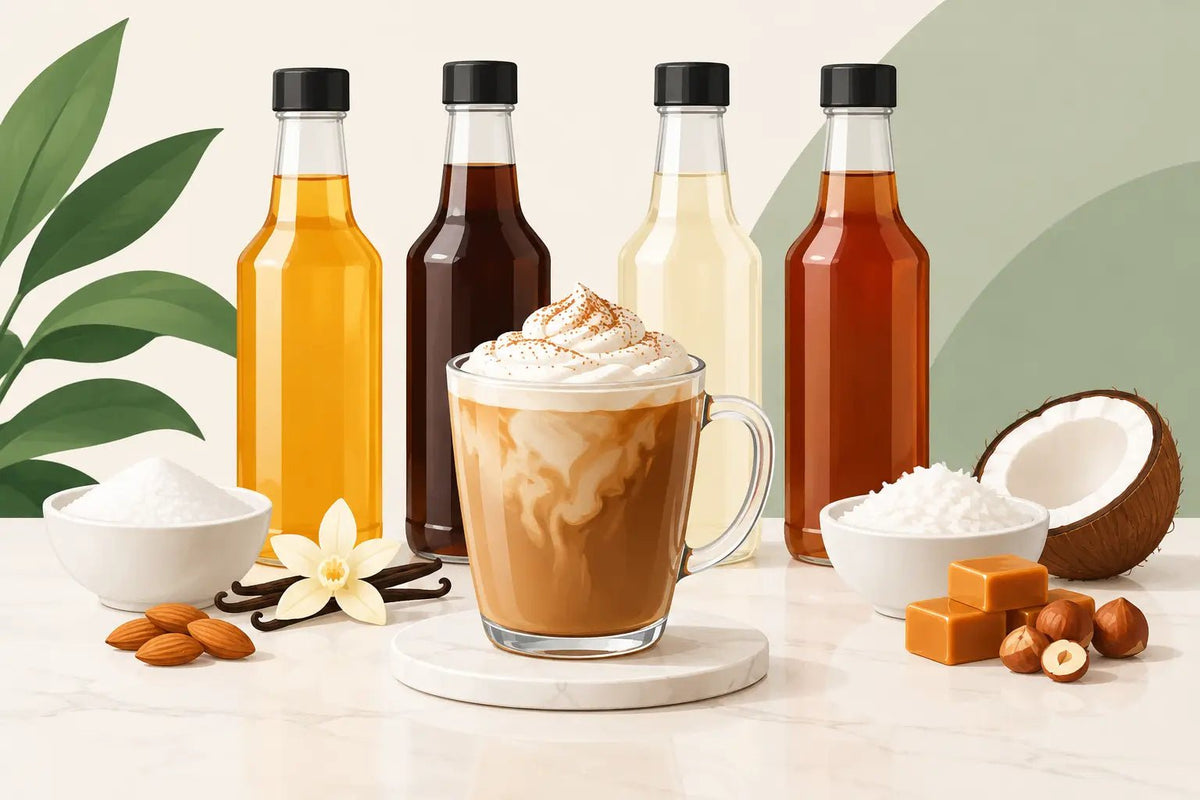
That daily coffee ritual does not need to disappear just because sugar has. The top sugar free syrups can add vanilla, caramel, hazelnut or chocolate flavour to a flat white, iced coffee or protein shake while keeping your carbohydrate intake where you want it. The trick is choosing a syrup that tastes good to you, works in the recipe at hand and has an ingredient list that suits your version of keto or low-carb eating.
Sugar-free syrup is one of those pantry extras that can make simple food feel far less repetitive. A dash can turn plain Greek yoghurt into dessert, give a homemade iced latte café-style flavour, or rescue a batch of baking that needs a little extra sweetness. You are not looking for a compromise that feels like one. You are looking for a reliable way to keep favourite flavours on the menu.
What makes a syrup keto-friendly?
The words "sugar free" are a useful starting point, not the whole story. For keto and LCHF shoppers, the nutrition information panel and ingredients list do the real work. Check the carbohydrate figure per serve, then consider whether the serving size reflects how you actually use it. A small drizzle in coffee is different from generously coating pancakes or stirring syrup through an entire batch of cheesecake filling.
Sweeteners matter too. Erythritol, stevia and monk fruit are common in lower-carb syrups. They generally have little impact on blood glucose for many people, although flavour and tolerance differ. Erythritol can have a cool finish in some products, while stevia can taste slightly herbal or bitter when used heavily. Monk fruit blends often round out sweetness well, but the final result depends on what else is in the blend.
Allulose is another sweetener keto shoppers may come across. It behaves more like sugar than many alternatives and can give a softer, more natural sweetness, particularly in sauces and desserts. It is not as widely used in Australian products as erythritol or stevia, so it may be less common on the shelf.
If you are closely managing carbs, be more cautious with syrups containing maltitol, glucose-based fillers, rice syrup, malt extracts or significant amounts of glycerine. A product can be marketed around reduced sugar while still being a poor fit for a strict keto target. There is no need to be alarmed by every unfamiliar ingredient, but reading the full panel gives you control.
Top sugar free syrups by how you use them
There is no single best bottle for every kitchen. A thin, highly flavoured syrup may be brilliant in coffee but underwhelming on pancakes. A richer dessert-style sauce can be perfect over yoghurt, yet too thick to dissolve nicely in a cold drink. Start with the food ritual you want to keep.
For coffee at home
Vanilla, caramel and hazelnut are the dependable choices for hot coffee. They pair easily with almond milk, cream, unsweetened dairy milk alternatives and collagen creamers without competing with the coffee itself. Chocolate and mocha flavours suit iced coffees and blended drinks particularly well.
Begin with a small pour, especially if it is your first time using a brand or flavour. Sugar-free syrups can vary a lot in sweetness. Adding a little at a time is much easier than trying to dilute an overly sweet coffee. If you enjoy strong espresso, choose flavours that complement rather than conceal it, such as vanilla, caramel or cinnamon-style blends.
For shakes, smoothies and protein recipes
A flavoured syrup is a practical shortcut when you are tired of drinking the same vanilla protein shake. Chocolate syrup can add depth to a creamy shake, while caramel or maple-style flavours work beautifully with cinnamon, nut butter and ice. A berry-style option can lift plain yoghurt or a low-carb smoothie without relying on fruit juice.
This is also where texture matters less. Because the syrup is being blended or stirred through other ingredients, a lighter consistency is usually ideal. Keep the rest of the recipe simple at first so you can tell whether the syrup's sweetness and aftertaste are right for you.
For pancakes, waffles and dessert bowls
Maple-style syrup is the obvious pantry hero for low-carb pancakes, waffles and chaffles. It can also bring a familiar finish to a bowl of yoghurt, chia pudding or keto granola. Chocolate, salted caramel and butterscotch-style options are more dessert-forward, pairing well with berries, whipped cream and sugar-free chocolate.
For toppings, look for a syrup with enough body to cling to food rather than disappear underneath it. This is one category where a thicker sauce-like pour can feel more satisfying. Remember that toppings are easy to overdo, so use the nutrition panel to work out a serving that fits your day rather than assuming every sugar-free option is carb-free.
For baking and cooking
Syrups can add flavour to mug cakes, cheesecake fillings, whipped cream, frosting and no-bake slices. Vanilla, caramel and maple-style flavours are the most flexible because they work with so many ingredients. They are especially useful when a powdered sweetener provides sweetness but not the flavour profile you want.
Heat can change both flavour and texture, though. Some syrups become less noticeable in the oven, and others may not caramelise as sugar does. If you want crisp edges, chewiness or a golden syrup-like finish, a liquid sugar-free syrup alone may not deliver it. Pair it with a keto baking sweetener designed for cooking, then use the syrup as the flavour booster.
How to choose the right bottle
A little label-reading now can prevent a disappointing first taste. When comparing options, consider sweetness, carbohydrate content, ingredients, consistency and intended use together. The best choice is not necessarily the one with the biggest flavour range or the lowest number on one line of the panel. It is the one you will genuinely enjoy using often enough to make your low-carb routine easier.
Think about your preferred sweetener as well. If erythritol has never agreed with you, avoid buying a large bottle just because the flavour sounds tempting. If you are sensitive to stevia's aftertaste, a monk fruit blend or allulose-based option may be a better match. Individual response is real, and keto eating works best when your pantry reflects what feels good for you.
Flavour intensity is another useful consideration. A concentrated coffee syrup may only need a teaspoon, which makes it economical and lets you control the result. A thicker pancake syrup may require more per serve, but it provides a different kind of experience. Neither is automatically better - they solve different problems.
At Yo Keto, it makes sense to shop syrups alongside the foods you plan to use them with: low-carb baking ingredients for weekend treats, protein products for weekday shakes, or sugar-free chocolate and snacks when dessert calls. Building a few combinations around flavours you already love is more practical than buying every novelty bottle at once.
A quick check before it goes in your trolley
Before choosing from the top sugar free syrups, ask three straightforward questions. Will this flavour suit what I make most often? Does the carbohydrate and sweetener profile fit my approach? And will I enjoy the amount needed for a satisfying serve?
For people using blood, breath or urine ketone testing, a new syrup can be worth treating like any other new food. Use a normal portion, keep the rest of the meal familiar and pay attention to your own results and how you feel. Testing is not essential for everyone, but it can offer useful feedback when you are fine-tuning a strict ketogenic plan.
Sugar-free syrups are not meant to make every meal taste like dessert. Their real value is more everyday than that: a caramel coffee on an early start, maple flavour over a relaxed weekend brekkie, or a chocolatey finish when plain yoghurt needs a little help. Pick one flavour that fits your routine, use it generously enough to enjoy it and let your low-carb pantry work around the life you actually live.