
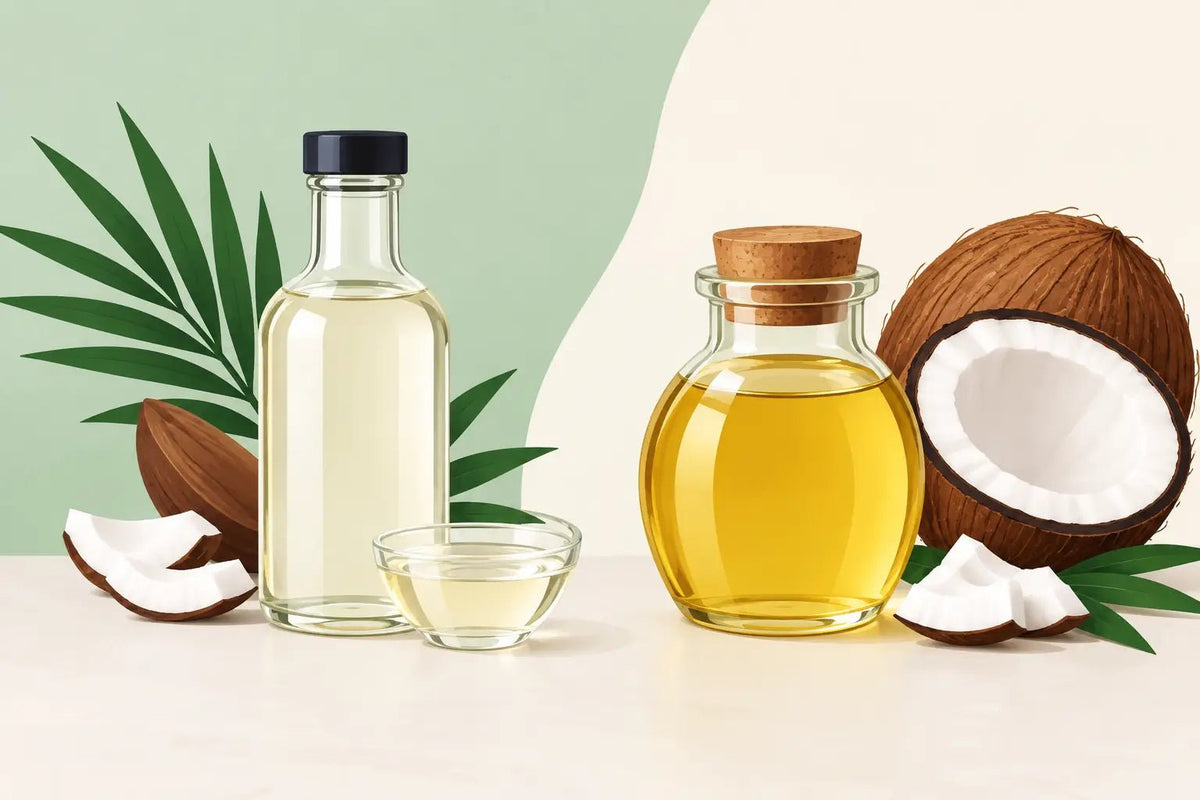
A spoonful of fat can do very different jobs in a keto routine. One may blend into your morning coffee and offer quick energy, while another makes a curry smell incredible and gives roasted vegetables a crisp edge. When comparing MCT oil versus coconut oil, the useful question is not which one is universally better. It is which one suits what you are eating, how your body responds and what you want from it.
Both are low-carb fats that can have a place in ketogenic, LCHF and sugar-free eating. But they are not interchangeable, even though MCT oil is commonly derived from coconut oil. Their fatty-acid profiles, heat tolerance, flavour and digestion can feel quite different in real life.
MCT oil versus coconut oil: the key difference
MCT stands for medium-chain triglycerides, a type of saturated fat with a shorter carbon chain than the long-chain fats found in many foods. Because of their structure, MCTs are absorbed and processed relatively quickly by the liver. This is why MCT oil is popular with people looking for convenient energy during keto, fasting, busy workdays or training.
Coconut oil contains some MCTs, but it is not the same thing as concentrated MCT oil. A large portion of coconut oil is lauric acid, also known as C12. Lauric acid is sometimes grouped with MCTs, yet it behaves more like a longer-chain fat in the body than the C8 and C10 fats usually concentrated in MCT oil.
In plain food terms, MCT oil is a targeted functional fat. Coconut oil is a versatile kitchen fat that happens to contain some medium-chain fatty acids. If you are chasing a more noticeable ketone-supporting effect, an MCT oil with a high C8 content is generally the more direct option. If you want flavour, texture and an all-purpose low-carb pantry staple, coconut oil earns its spot.
What C6, C8, C10 and C12 actually mean
The numbers on an MCT product refer to the length of the fatty acid chain. You do not need to memorise biochemistry to shop confidently, but knowing the basics can make a label much easier to read.
C8: caprylic acid
C8 is often the preferred option for people using MCT oil to support ketone production. It is rapidly transported to the liver and is commonly chosen for coffee, smoothies, fasting routines and pre-training fuel. A C8-only oil can be effective in a small amount, though it can also be the variety most likely to cause tummy trouble if you start too enthusiastically.
C10: capric acid
C10 is also a useful MCT and is frequently paired with C8. It is processed quickly, although generally a little less directly than C8. C8 and C10 blends are a practical choice for everyday keto use, particularly if you want the benefits of MCTs without focusing on a single fatty acid.
C6: caproic acid
C6 is less commonly featured as a hero ingredient because it has a sharper taste and aroma. It may appear in some blends, but it is not usually the reason keto shoppers choose an MCT oil.
C12: lauric acid
C12 is the main reason coconut oil should not be treated as a bottle of MCT oil in solid form. It does have medium-chain chemistry, but its digestion and metabolism are slower and more complex than C8 or C10. Coconut oil can still fit beautifully into keto eating, but it is not the closest substitute when your aim is rapid MCT-derived energy.
Ketones and energy: where MCT oil shines
MCT oil is most useful when convenience matters. It has a neutral taste, stays liquid at room temperature and can be stirred into coffee, blended into a shake or added to a low-carb dressing. It adds fat without adding carbohydrate, protein or sweetness, which makes it easy to tailor to your own macros.
For people eating keto, C8-rich MCT oil may raise circulating ketones more readily than coconut oil. That does not mean it replaces a well-formulated low-carb diet, nor does it guarantee that you will feel a dramatic effect. Ketone response varies with carbohydrate intake, meal timing, activity, sleep and individual metabolism.
MCT oil can also be useful when appetite is low but you still want a little energy, or when a creamy coffee helps you get through a fast without turning breakfast into a full meal. Some people enjoy it before a gym session, while others prefer it in an afternoon coffee instead of reaching for a sugary snack.
There is a trade-off: MCT oil is not very filling on its own for everyone. It provides energy, but it does not bring the texture, flavour or broader food experience of butter, cream, avocado or a proper meal. Think of it as an add-on, not a requirement for successful keto.
Coconut oil belongs in the kitchen
Coconut oil has a gentle coconut flavour in its virgin form, while refined coconut oil is more neutral. It is solid or semi-solid in cooler weather, which gives it a useful texture for baking, homemade chocolate, fat bombs and low-carb slice recipes. It can also work well in curries, stir-fries and roasted vegetables.
For cooking, coconut oil is usually the more practical choice. MCT oil is not designed for high-heat frying. It has a lower smoke point and is better added after cooking or used in cold and warm foods. Heating it hard can compromise its quality and makes an expensive functional oil do a job that coconut oil, ghee, butter, olive oil or animal fats may handle better.
Coconut oil is also more likely to contribute to satiety as part of a meal because you are usually using it in food alongside protein, fibre and other fats. A spoonful in a curry is not metabolically identical to a spoonful of C8 oil in coffee, but neither needs to be. They serve different moments.
Digestion matters more than the label
The main mistake with MCT oil is starting with a full tablespoon because someone online said it changed their mornings. For plenty of people, that is a fast route to cramps, nausea or an urgent visit to the loo. MCT oil has a reputation for digestive side effects because it is absorbed quickly, especially when taken on an empty stomach.
Start with one teaspoon a day, preferably with food, and give your body several days to adjust. If that feels comfortable, increase gradually. Some people happily use a tablespoon or more; others find a smaller amount is their sweet spot. More is not automatically better.
Coconut oil can also upset digestion in larger amounts, but people often find it gentler because it is used as part of a meal rather than taken as a concentrated oil shot. If you have a medical condition affecting fat digestion, are pregnant or breastfeeding, take regular medication, or have concerns about cholesterol or cardiovascular health, personalised advice from a qualified health professional is sensible.
How to choose for your routine
Choose MCT oil when you want a convenient, neutral and concentrated source of C8 and C10 fats. It makes sense in keto coffee, shakes, dressings, fasting support and portable routines where you do not want coconut flavour or a solid fat.
Choose coconut oil when you are cooking, baking or making keto treats. It is the better fit when texture and flavour matter, and when you want a pantry staple rather than a targeted supplement-style fat.
Many keto households keep both. MCT oil handles the functional moments: coffee before the school run, a fasted training session, or a quick lunch shake between meetings. Coconut oil handles the delicious parts: a fragrant curry, a batch of sugar-free choc treats, or a low-carb bake that needs structure.
A quick look at calories and macros
Neither oil is a free food. Both are almost entirely fat and provide roughly the same energy per tablespoon, around 500 kJ or 120 calories. Neither contains meaningful carbohydrates, so both can fit a ketogenic macro approach. But if body-composition goals are part of your plan, portions still matter.
It is easy to add several tablespoons of oil to coffee, cooking and snacks without noticing. That may suit someone deliberately increasing energy intake, but it may stall progress for someone who is already meeting their needs through satisfying meals. Keto is not about adding fat at every opportunity. It is about using the amount that helps you feel nourished, energised and on track.
The practical keto pick
If you are new to MCTs, a C8/C10 blend and a teaspoon-sized serve is often a friendly place to begin. If you are an experienced keto eater who wants a more focused ketone-support option, C8 MCT oil may be worth considering. For everyday cooking and baking, coconut oil remains a reliable, low-carb favourite.
You are not choosing sides forever. Keep the oil that makes your routine easier, your food more enjoyable and your keto way of eating something you can happily stick with.