
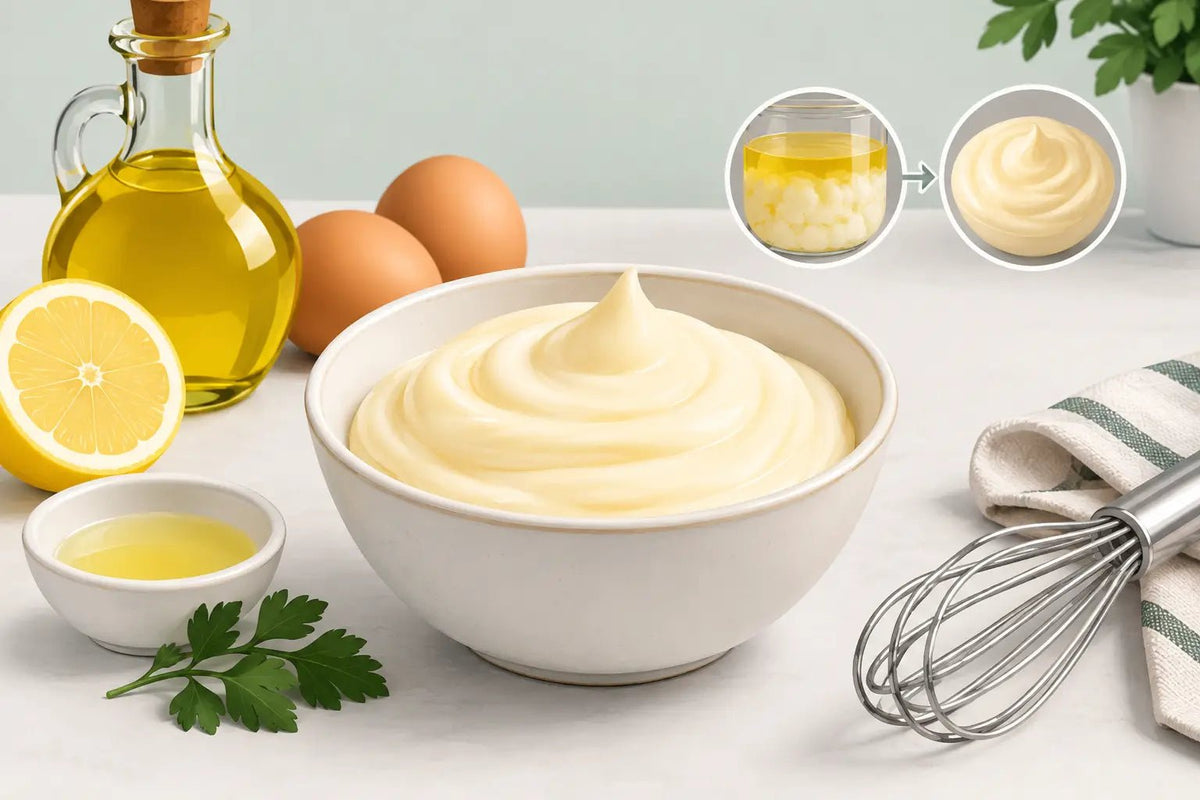
A good keto mayo turns a quick lunch into something you actually look forward to: chicken salad that is properly creamy, a crunchy slaw with body, or a plate of hot chips made from zucchini, served with a generous dollop. Once you know how to make keto mayonnaise, you can skip the added sugars and questionable seed-oil blends often hiding in supermarket jars - while keeping the rich, familiar flavour you want.
The process is simple, but mayonnaise is an emulsion, which means a few small details make all the difference. Start with room-temperature ingredients, choose an oil you enjoy eating, and add it in the right way for your equipment. You’re in the right place for a keto staple that earns its spot in the fridge.
How to Make Keto Mayonnaise at Home
For a classic, thick mayonnaise, you need an egg yolk, a mild oil, acid and seasoning. Dijon mustard is optional but useful: it adds flavour and helps stabilise the emulsion. This recipe makes roughly 250 mL, enough for several meals.
You will need:
- 1 large egg yolk, at room temperature
- 250 mL light olive oil, avocado oil or macadamia oil
- 1 teaspoon Dijon mustard
- 1 tablespoon lemon juice or apple cider vinegar
- 1/4 teaspoon fine salt, plus more to taste
When all the oil is incorporated, taste it. Add a little more salt, lemon juice or vinegar if it needs brightness. If the mayonnaise is thicker than you like, whisk through one teaspoon of water at a time until it reaches your preferred consistency.
A stick blender is the fastest option for most home cooks. Add the egg yolk, mustard, acid and salt to a narrow jar just wider than the blender head, then pour in the oil. Put the blender right at the bottom, process for 10 to 15 seconds without moving it, then slowly lift it through the mixture. You should have thick mayo in under a minute.
Which Oil Makes the Best Keto Mayo?
Keto mayonnaise is naturally low in carbohydrates. The bigger choice is which fat profile and flavour suit your way of eating. There is no single correct oil, so choose based on taste, budget and how you will use the finished mayo.
Avocado oil gives a clean, neutral result and is a popular choice when you want the flavourings in a salad or sauce to stand out. Macadamia oil is also a lovely fit for keto eating, with a mild buttery character that works especially well in chicken and seafood dishes.
Extra virgin olive oil has more pronounced flavour and can turn bitter when aggressively blended. If you love its peppery edge, whisk it by hand or use half light olive oil and half extra virgin olive oil. Light olive oil does not mean low fat. It simply refers to a more neutral-tasting, refined olive oil.
MCT oil is not a good main oil for mayonnaise. It remains thin and can be hard on the stomach in larger serves, particularly if you are new to MCTs. If you enjoy it, add a small amount to a finished dressing rather than replacing the oil in this recipe.
Why Homemade Mayo Splits
Mayonnaise splits when the oil and water-based ingredients fail to stay emulsified. It is common, recoverable, and not a reason to throw out good ingredients.
Cold eggs and cold oil can make emulsifying harder, so leave them on the bench for 20 to 30 minutes before you begin. Adding oil too quickly is the other usual culprit, especially when whisking by hand. The first few spoonfuls of oil create the structure, so patience there matters more than later on.
If your mayo looks oily, thin or curdled, start with a clean bowl and a fresh egg yolk. Whisk the new yolk with a teaspoon of water, then slowly add the split mayonnaise as though it were the oil. It should come back together into a smooth, thick sauce.
A stick blender can also split mayo when the jar is too wide or the blender is moved too soon. Use a narrow vessel, keep the blade over the egg yolk at the base, and give it time to form a creamy layer before lifting.
Keep the Carbs Low Without Losing Flavour
The basic recipe contains very little carbohydrate, but bottled condiments can shift the numbers quickly. Check labels on mustard, flavoured vinegar, spice mixes and store-bought sauces. Some include sugar, glucose syrup or starches that are easy to miss when you are trying to keep your daily carbs in check.
Lemon, lime and vinegar all bring the acidity mayo needs, and the amounts used are modest. Dijon mustard is generally keto-friendly in a teaspoon serve, but products vary. If you are strict with carbohydrate tracking, measure your ingredients and use the nutrition panel from the specific products in your kitchen.
For a sweeter-style mayo, a pinch of monk fruit or allulose can soften the acidity without adding regular sugar. Allulose behaves particularly well in cold sauces because it dissolves easily and has a clean, gentle sweetness. Start tiny, taste, then adjust. Mayo should taste savoury first.
Easy Keto Mayonnaise Variations
Once you have the base, it is easy to make the kind of sauce that saves dinner from becoming another plain protein-and-veg plate. Mix flavours into a portion rather than the whole batch if you want flexibility through the week.
For garlic aioli, crush or finely grate one small garlic clove into 125 mL mayonnaise and leave it for 10 minutes before serving. Fresh garlic gets stronger as it sits, so a little goes a long way.
For a smoky burger sauce, stir through smoked paprika, a pinch of garlic powder and finely chopped sugar-free pickles. A spoonful alongside a beef patty, lettuce, cheese and avocado gives you serious takeaway-style satisfaction without the bun.
For herby seafood mayo, combine chopped dill or parsley with lemon zest and cracked black pepper. It is excellent with salmon, prawns, tinned tuna patties or a simple lettuce cup lunch.
For a spicy version, add chilli flakes, cayenne or a no-added-sugar hot sauce. The best level depends on the chilli product and your heat tolerance, so build it gradually.
Storage and Food Safety
Because homemade mayonnaise contains raw egg, keep it refrigerated in a clean, sealed jar and use it within three to four days. If you are pregnant, immunocompromised, serving very young children, or simply prefer extra caution, use pasteurised eggs. They are a practical choice for homemade sauces.
Do not leave mayo at room temperature for extended periods, particularly during an Australian summer barbecue. Bring out a small bowl for serving and keep the rest chilled. Use a clean spoon every time, rather than returning a spoon that has touched food to the jar.
The mayonnaise may firm up in the fridge. Let it stand for five minutes and stir before using. If it has an off smell, unusual colour or has been left out too long, bin it and make a fresh batch.
Homemade keto mayonnaise is one of those small kitchen wins that makes low-carb eating feel less like a workaround and more like proper food. Keep a jar on hand, play with the flavours you genuinely enjoy, and let a creamy spoonful do the hard work when dinner needs a little more life.