
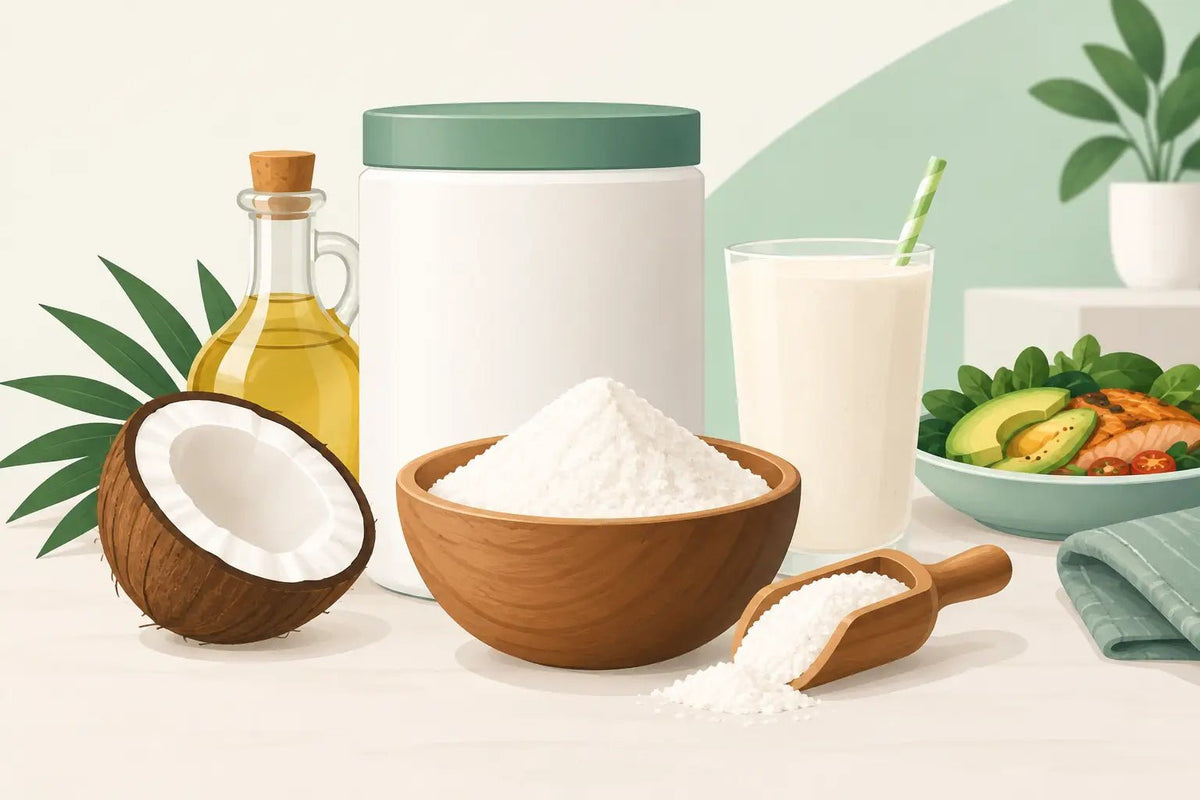
That mid-morning coffee can do more than taste good. For many keto and low-carb eaters, it is a practical chance to add satisfying fats without reaching for a sugary snack. MCT oil powders make that ritual simpler: they are scoopable, easier to carry and often much less messy than pouring oil into a mug or shaker.
If you want a convenient way to add MCTs to coffee, protein shakes, smoothies or low-carb baking, you’re in the right place. The best option is not automatically the one with the biggest serving size, though. The type of MCT, the ingredients used to turn oil into powder and how your stomach responds all matter.
What are MCT oil powders?
MCT stands for medium-chain triglycerides, a type of fat commonly sourced from coconut oil. Compared with longer-chain fats, MCTs are absorbed and processed differently by the body. They travel more directly to the liver, where they may be used as a prompt energy source and can contribute to ketone production.
MCT oil powders begin as liquid MCT oil. Manufacturers combine the oil with a carrier ingredient, then dry it into a fine powder. That carrier is what makes a free-flowing, easy-to-mix product possible. It also means a powder is never quite the same thing as a bottle of pure liquid MCT oil.
For keto households, that trade-off can be worthwhile. A powder can turn a plain coffee into a creamy drink, travel neatly in a gym bag and blend into a shake without the oily layer that sometimes sits on top of liquid MCT. It is also easier to measure accurately when you are building a repeatable breakfast or pre-training routine.
Why choose powder instead of liquid MCT oil?
Convenience is the obvious answer, but texture is often the bigger reason. Liquid MCT oil can blend beautifully with a blender or frother, yet it may separate in a spoon-stirred drink. MCT powder generally disperses more evenly, particularly in warm coffee, tea and protein drinks.
Powders are handy for people who prefer a less oily mouthfeel. They can also be a practical option for travel, work or camping, where a leaky bottle in the boot or laptop bag is nobody’s idea of a good time.
Liquid MCT still has its place. It is usually more concentrated because it does not need a carrier, so you may get more MCT oil per serve. It can suit salad dressings, homemade keto mayonnaise and recipes where you want to control every ingredient. If your goal is the highest possible MCT intake with no added powders or flavourings, a quality liquid product may be the better fit.
The MCTs to look for: C8, C10 and C6
Not all MCTs behave identically, and labels can look more technical than they need to. The numbers refer to the length of the fatty acid chain.
C8: caprylic acid
C8 is widely favoured in keto products because it is efficiently converted into energy and ketones. People often choose C8-focused powders for mental focus, fasting support or a quick fuel source before training. It tends to be the premium option, so it may cost more per serve.
C10: capric acid
C10 is also an MCT and is commonly paired with C8. It can be a useful everyday choice, especially in blends designed for coffee or shakes. C10 is still keto-friendly, although it is generally metabolised a little less quickly than C8.
C6: caproic acid
C6 appears in some MCT blends. It is an MCT, but its stronger taste and aroma mean many people prefer products that focus on C8, C10 or a combination of both. If flavour is a priority, checking the MCT breakdown is worthwhile.
A label saying simply “MCT powder” does not tell the whole story. Look for a stated C8/C10 ratio or a clear indication that the product contains caprylic and capric acids. That detail helps you compare products on more than marketing language.
Check the carrier ingredients before you scoop
The carrier ingredient is where two MCT powders can differ most. Some use tapioca-derived maltodextrin, acacia fibre, coconut-based ingredients, dairy proteins or other bulking agents to keep the oil stable and mixable. None is automatically right or wrong, but the choice should suit your eating style and tolerance.
If you follow a strict ketogenic approach, pay attention to total carbohydrates per serve rather than assuming every MCT powder is carb-free. Some carriers add a small amount of carbohydrate, while others contribute fibre. A small amount may fit comfortably within your daily target, but it is best to know what you are including, particularly if you track blood ketones or keep carbs very low.
For dairy-free eating, check whether the powder contains milk-derived ingredients. For people avoiding particular fibres or sweeteners, the full ingredient list matters too. Flavoured powders can be a delicious shortcut, but they may include natural flavours, sweeteners, collagen, protein or creamers. That can be exactly what you want - or it may overlap with ingredients already in your shake.
At Yo Keto, shopping by ingredient and dietary function makes this easier: you can choose between straightforward MCT options and more complete coffee or performance blends depending on what your routine needs.
How to use MCT oil powders without upsetting your stomach
MCTs can be useful, but more is not always better. Taking a large serve too quickly can cause cramping, nausea or an urgent dash to the loo, especially if you are new to MCT oil or using it on an empty stomach.
Start with half a serve, or even less, for several days. Mix it into a meal, coffee with cream or a protein shake, then increase gradually only if you feel comfortable. This matters even more with C8-heavy products, which can feel potent for some people.
A simple starting point is one small scoop in your morning coffee or afternoon protein shake. Once you know your tolerance, you might use it before a workout, during a busy workday when lunch is delayed, or as part of a more filling smoothie. The right amount depends on your overall fat intake, calorie needs, digestion and goals.
MCT powder is not a substitute for a varied keto diet. Eggs, meat, fish, avocado, olive oil, nuts, seeds and low-carb vegetables all bring nutrients that a scoop of powder does not. Think of it as a functional pantry extra, not the foundation of every meal.
Easy ways to add MCT powder to keto food and drinks
Coffee is the classic, particularly when paired with butter, ghee, cream or a keto-friendly creamer. Use a milk frother or blender for the smoothest finish. If you are adding collagen or protein powder as well, blend the dry ingredients first with a splash of liquid before topping up the mug to reduce clumps.
For a quick breakfast, combine unsweetened almond milk, ice, low-carb protein powder, MCT powder and a spoonful of nut butter. It is filling, portable and easy to adjust with cinnamon, cocoa or a keto-friendly sweetener.
MCT powder can also work in chia puddings, mug cakes, keto porridge alternatives and no-bake snack mixes. In baking, follow the product directions and use it as an addition rather than expecting it to replace every fat in a recipe. Butter, coconut oil and eggs provide structure and moisture in ways a powder may not.
If you fast, read the label and decide what your version of fasting allows. Plain MCT oil or powder contains energy, so it is not a strict water fast. Some people choose it during a modified fast for satiety or routine, while others save it for their first meal. There is no need to make it more complicated than your own goal requires.
Choosing the right MCT powder for your routine
Choose an unflavoured, simple formula if you want flexibility across coffee, savoury recipes and shakes. A C8 or C8/C10-focused product may suit those prioritising fast energy and ketone support. A flavoured creamer-style powder can be ideal when convenience and a café-style coffee are the priority.
Compare serves, not just tub size. Check how many grams of MCT oil you receive per scoop, the carbohydrate count, the carrier ingredient and whether the flavouring or added protein works with your diet. A bigger tub is not always better value if the active MCT content per serve is low.
The most useful MCT oil powders are the ones you will genuinely use. Keep a scoop near the coffee machine, start gently, and let your appetite, digestion and daily routine guide the rest.