
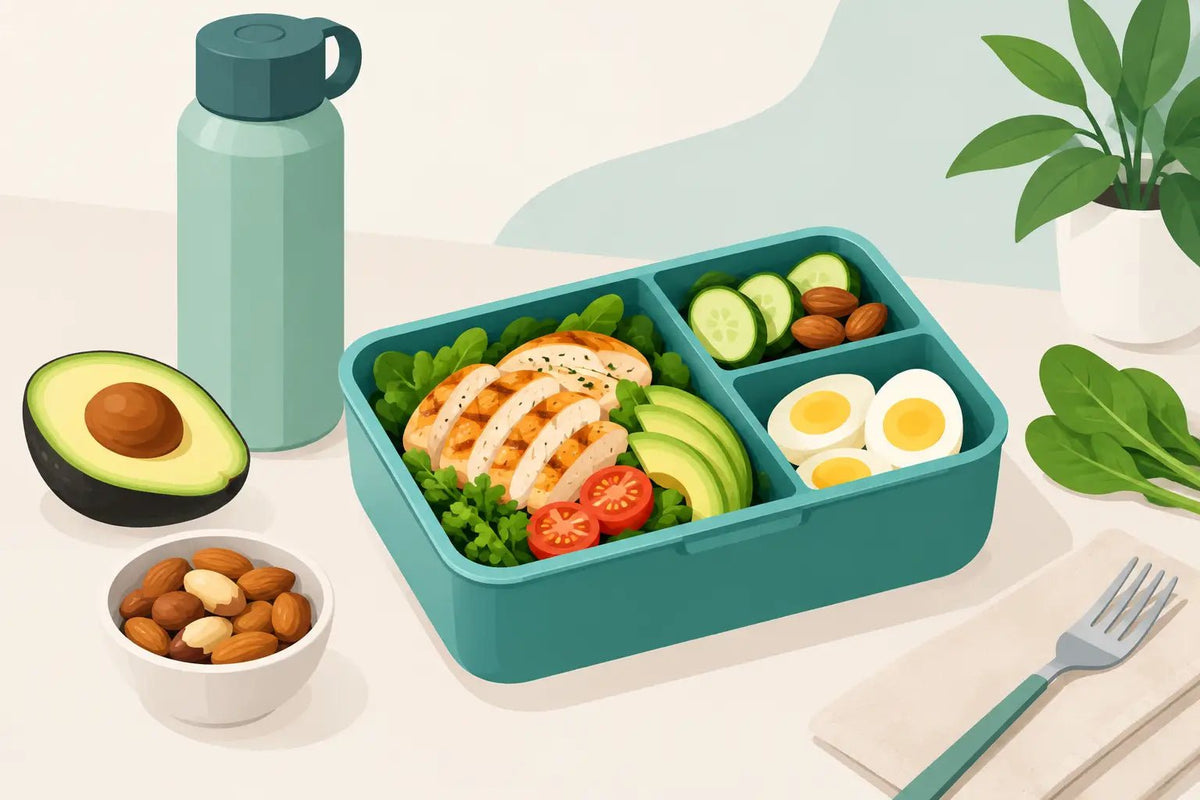
The 3 pm biscuit run is rarely about willpower. More often, it is what happens when lunch was too small, too low in protein or packed with hidden carbs that leave you hungry again. This keto lunchbox guide is for building a portable lunch that actually keeps you satisfied, whether you are commuting, working on site, studying or spending the day on the road.
A good keto lunchbox does not need to look like a sad container of leaves. Think proper food: savoury protein, colourful low-carb vegetables, satisfying fats and a snack or two you genuinely look forward to eating. You are in the right place if you want your workday meals to feel practical, varied and firmly within your carbohydrate target.
Start Your Keto Lunchbox With a Satisfying Base
The easiest way to make lunch reliable is to begin with protein. Leftover roast chicken, sliced roast beef, boiled eggs, tuna, salmon, meatballs, pulled pork, tofu or tempeh can all do the job. Protein gives your lunch substance, particularly if your afternoon includes a gym session, physical work or a long gap before dinner.
Next, add low-starch vegetables for crunch, fibre and volume. Cucumber, capsicum, celery, radish, baby spinach, rocket, broccoli and cauliflower are dependable choices. A small serve of cherry tomatoes may suit your carb allowance, while avocado adds creaminess and helps turn a simple lunch into a filling one.
Then bring in fat with purpose rather than treating it as a compulsory extra. Cheese, olives, avocado, mayonnaise, pesto, olive oil dressing, butter or a creamy dip can make lean proteins far more satisfying. How much you add depends on your goal. If you are eating keto for appetite control or need more energy, a more generous serve can work well. If you are actively managing calories, let protein and vegetables take up more space and use fats for flavour and fullness.
A Keto Lunchbox Formula That Stops Guesswork
You do not need a new recipe every day. A repeatable formula makes weekday prep much easier, then small swaps keep it interesting. Pack one protein, one or two vegetable options, a flavourful fat and a low-carb snack or treat if it helps you avoid the vending machine.
For example, a roast chicken lunchbox can include cucumber sticks, cheese cubes, olives and a sachet or small tub of mayo. The next day, use the same chicken with rocket, avocado, a creamy dressing and a few low-carb crackers. Both are quick, but they do not feel like the same lunch.
When you are making several lunches at once, choose ingredients that hold up well in the fridge. Cooked meats, boiled eggs, firm cheeses, washed salad leaves and chopped crunchy vegetables generally travel better than delicate dressed salads. Keep wet ingredients separate until you are ready to eat so nothing turns soggy by midday.
Four easy lunchbox combinations
- Snack plate lunch: Salami or roast turkey, cheddar, cucumber, olives, cherry tomatoes and low-carb crackers.
- Tuna crunch box: Tuna mixed with mayo, celery and pickles, plus capsicum strips, avocado and cheese crisps.
- Leftover dinner box: Meatballs or grilled chicken thighs with roasted broccoli, cauliflower mash and a little pesto.
- Vegetarian box: Boiled eggs, marinated tofu, feta, leafy greens, pumpkin seeds and a full-fat dressing.
Keto-Friendly Swaps for Familiar Lunch Habits
Most lunchbox cravings are really about convenience and familiar textures. You may miss the crunch of a sandwich, the comfort of a wrap or the sweet finish after lunch. The answer is not necessarily to recreate every food exactly. It is to keep the ritual while choosing ingredients that better fit your way of eating.
Instead of standard bread, try a low-carb bread mix, keto-friendly wraps or crackers, checking the nutrition panel for net carbohydrates and serving size. A product can be labelled lower carb without being appropriate for your personal target, especially when several serves are easy to eat in one sitting.
For a crunchy snack, look for cheese crisps, pork crackle, roasted nuts, seed crackers or lower-carb chips. Nuts are convenient and nutritious, but they are also easy to overdo while working at a screen. Portion them before you leave home rather than taking the whole bag.
A sugar-free chocolate square, low-carb bar or keto-friendly lolly can be useful when an afternoon sweet craving is your usual derailment point. Just remember that sugar-free does not automatically mean carb-free, and some sweeteners can cause digestive discomfort for some people. Allulose and monk fruit are popular options, but tolerance is individual. Start with a modest portion if a product is new to you.
Pack for Your Actual Day, Not an Imaginary One
Your lunchbox needs change with your routine. A desk day with a fridge and microwave gives you plenty of options, from reheated leftovers to a salad with dressing packed separately. A tradie, delivery driver or regional traveller may need food that can sit safely in an insulated bag and be eaten one-handed between jobs.
For hot meals, a wide-mouth food flask can make winter lunches far more appealing. Fill it with leftover keto soup, slow-cooked beef, creamy chicken casserole or bone broth with shredded chicken. Warm, savoury food can be especially helpful when a cold salad feels unappealing.
For lunches without reliable refrigeration, use an insulated lunch bag and ice brick, particularly for meat, eggs, dairy and mayonnaise-based dishes. Keep the bag out of direct sun and follow standard food-safety advice: if perishable food has been sitting warm for too long, it is not worth the risk. Shelf-stable backups such as tuna, salmon, nuts, electrolyte sachets and low-carb snack packs are handy to keep in your desk drawer, glove box or work bag.
Read Labels Without Turning Lunch Into Homework
Keto shopping becomes simpler once you know what to check. Start with the carbohydrate figure per serve and per 100 g, then look at how realistic the stated serving is. Sauces, flavoured yoghurts, dressings, protein bars and jerky often contain more sugar than their packaging suggests.
Be alert to ingredients such as maltodextrin, rice syrup, glucose syrup and added sugars. Starchy fillers can also add up in processed foods. That does not mean every packaged product is off the table. It means the label decides, not the marketing claim on the front.
For Australians following a strict ketogenic approach, tracking net carbs may be useful. This usually means total carbohydrate minus fibre, but label conventions and product formulations vary. If you are testing blood ketones, breath ketones or urine ketones, use the results as feedback alongside how you feel and what you are eating, rather than expecting one lunch to tell the whole story.
Make Prep Easier Than Buying Lunch
The best lunchbox plan is the one you can repeat when life gets busy. Set aside 20 minutes after dinner or on a Sunday afternoon to cook a protein, wash vegetables and portion a few snacks. Even preparing only two days ahead can reduce decision fatigue dramatically.
Keep a small rotation of lunchbox basics in the pantry and fridge: tinned fish, olives, pickles, low-carb crackers, nuts, sugar-free sauces, shelf-stable broth, cheese, eggs and whichever protein you regularly enjoy. Yo Keto makes this part easier by bringing together low-carb pantry swaps, snacks, sauces and functional nutrition options in one place, so you can build a lunch routine around foods you will actually use.
If you are new to keto, do not make the mistake of packing too little food and calling it discipline. Early on, a satisfying lunch and adequate hydration can make a major difference to energy and cravings. Water and electrolytes may be particularly useful if you are reducing carbohydrates sharply, exercising or feeling flat during the adjustment period.
A lunchbox should make your day easier, not give you another nutrition project to manage. Pack food you enjoy, keep one dependable backup on hand, and let a few well-chosen low-carb swaps protect the routines that matter to you.