
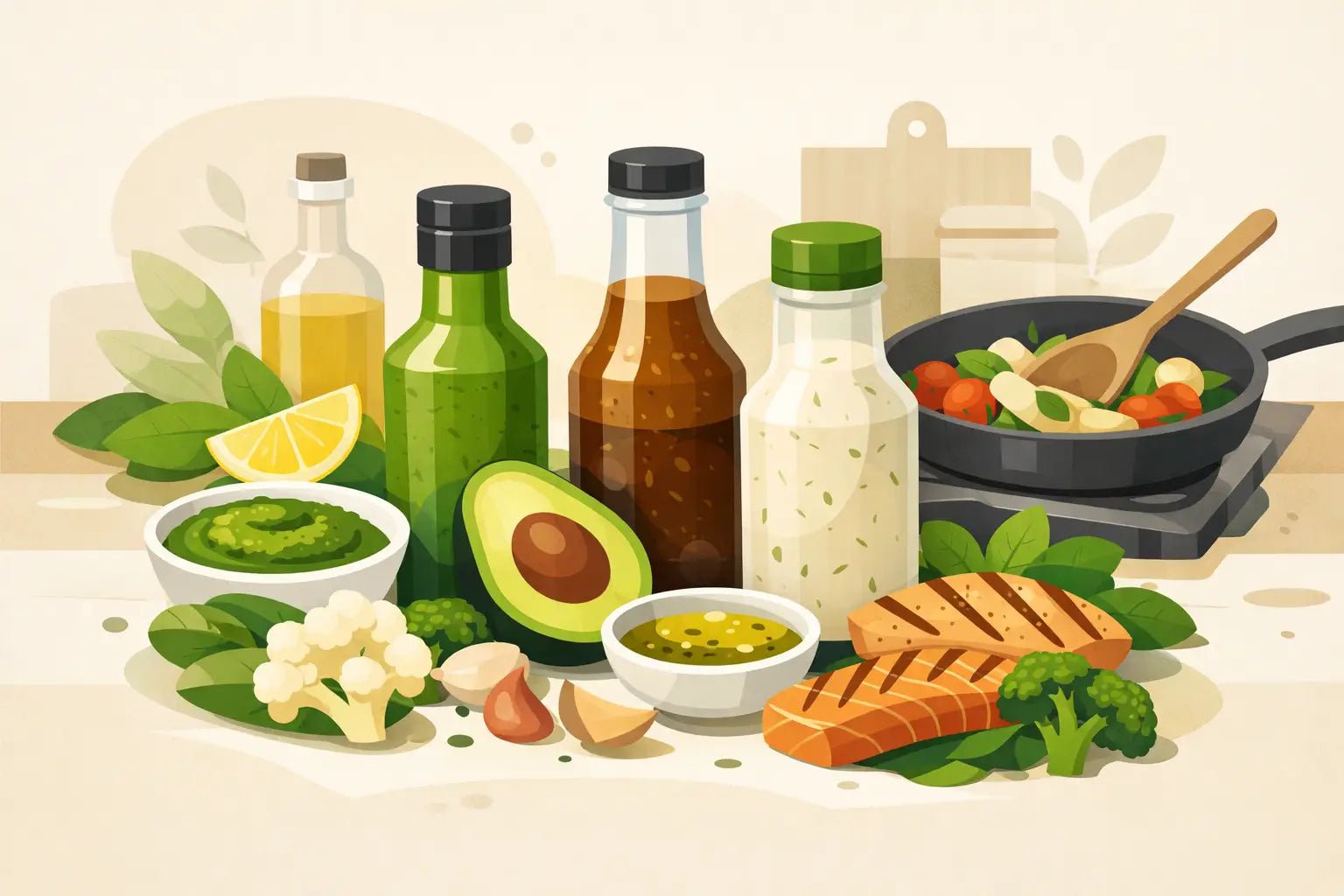
A quick stir-fry, proper pasta-style bake or sticky chicken tray bake can fit beautifully into your way of eating - until a seemingly harmless sauce adds more sugar than the rest of the meal. Keto friendly cooking sauces make weekday meals easier, more colourful and far more satisfying, without requiring you to make everything from scratch.
The trick is not simply choosing a jar with the word “low carb” on the front. It is knowing which sauces suit the meal, how much carbohydrate a realistic serving adds, and which ingredients give you the flavour you actually want. You are in the right place for a pantry that keeps dinner interesting, whether you are new to keto or have been eating low carb for years.
What Makes a Cooking Sauce Keto Friendly?
A keto-friendly sauce is generally low in digestible carbohydrates, free from added sugar or kept very low in sugar, and made with ingredients that work within your own carbohydrate target. That target varies. Someone following a strict ketogenic approach may carefully budget every gram of carbs, while an LCHF eater may have a little more flexibility.
For Australian packaged foods, begin with the nutrition panel. Check carbohydrates per serving, then look at the serving size with a practical eye. If the stated serve is one tablespoon but you will use a quarter of the bottle across dinner, calculate accordingly. The per 100 g column is handy for comparing similar products, especially when brands use very different serving sizes.
Then read the ingredients. Sugar may appear as sugar, cane sugar, rice malt syrup, honey, glucose, dextrose, fructose, maltodextrin or fruit concentrate. These are not always deal-breakers in tiny amounts, but they can make a sauce hard to fit into a lower-carb day. Tomato-heavy sauces also deserve a closer look: tomatoes are a useful keto ingredient, yet concentrated tomato products naturally contain more carbohydrate than creamy or oil-based sauces.
Sugar-free does not automatically mean perfect for every keto shopper either. Some people are comfortable with erythritol, stevia, monk fruit or allulose, while others prefer savoury sauces without sweeteners. Sugar alcohols can also upset sensitive stomachs when eaten in larger amounts. The best choice is the one that tastes good, suits your carb target and agrees with you.
The Keto Friendly Cooking Sauces Worth Keeping
A well-stocked sauce shelf gives you options without turning dinner into a separate cooking project. You do not need every flavour at once. Start with the styles you use most, then build from there.
Tomato and Italian-style sauces
A lower-sugar tomato sauce is one of the most useful staples around. Use it for zucchini noodle bolognese, chicken parmigiana, eggplant bake, meatballs or a quick pizza base on a low-carb wrap. Look for a sauce with no added sugar, sensible carbohydrate numbers and a short, recognisable ingredient list.
Tomato sauces can vary significantly, so do not assume a pasta sauce is keto just because it is savoury. If you enjoy a sweeter, richer profile, a sauce sweetened with monk fruit, stevia or allulose may be a good fit. If you prefer a more traditional savoury finish, choose one led by tomato, herbs, garlic and olive oil.
BBQ, smoky and sticky sauces
BBQ sauce is a classic keto pain point because conventional versions can be loaded with sugar. A keto version lets you make pulled chicken, smoky pork ribs, burger bowls and grilled tofu feel like a proper comfort-food meal.
These sauces are often a little sweeter than other pantry staples, even when they are sugar free. That is part of the point. Use them where that bold, caramelised flavour earns its place rather than adding them to everything. A few spoonfuls brushed over chicken in the final minutes of cooking can deliver more impact than coating the meat from the start.
Asian-inspired sauces and marinades
Tamari, soy-style sauces, sesame dressings, chilli sauces, satay-style sauces and ginger-garlic marinades can turn mince, prawns or leftover roast meat into an easy low-carb dinner. They are especially useful when you are building meals around cauliflower rice, cabbage noodles, broccoli, green beans or a bag of pre-cut stir-fry veg.
Watch sweet chilli and teriyaki carefully. Traditional versions are often high in sugar, so seek out lower-sugar alternatives if those flavours are favourites. Also pay attention to sodium. Salty sauces can be excellent for flavour, but if you are using stock, cured meats or cheese in the same dish, taste before adding extra salt.
Creamy, cheesy and peppery sauces
Creamy cooking sauces are naturally at home in keto meals because they pair well with fats such as cream, butter, cheese and olive oil. Think creamy garlic chicken with sautéed greens, mushroom sauce over steak, or a pepper sauce with a bunless burger and crunchy slaw.
The trade-off is that creamy does not always mean low carb. Flour, cornflour and modified starch are common thickeners, and some ready-made sauces contain more carbohydrate than expected. A good keto option relies more on dairy, cheese, spices, reduction or lower-carb thickeners than a big dose of starch.
Curry sauces
Curry night is absolutely still on the menu. A fragrant curry sauce can make chicken thighs, lamb, paneer, fish or vegetables feel generous and warming, particularly when served with cauliflower rice or steamed greens. Coconut-based curries are often a natural match for keto, but check the label for added sugar, starches and higher-carb ingredients such as sweet potato.
Heat level matters as much as carbs. If you are feeding the household, a mild base sauce plus fresh chilli at the table is often the easiest approach. You get the flavour and everyone gets the heat they enjoy.
How to Choose a Sauce Without Overthinking It
When you are comparing keto friendly cooking sauces, four quick checks make shopping simpler:
- Check carbohydrate per serve and compare it with the amount you will genuinely use.
- Scan the ingredients for added sugars, syrups and starch-heavy thickeners.
- Choose the flavour profile for the meal, not just the lowest number on the label.
- Consider dietary needs beyond carbs, including dairy, gluten, soy, sweeteners and spice tolerance.
Get More Flavour From Every Jar
Ready-made sauces are not a shortcut in the bad sense. They are a useful base. Stretch a serving further and add freshness by cooking onion-free garlic, ginger, herbs, lemon zest, fresh chilli, mushrooms or spinach alongside it. A splash of cream can soften a spicy curry, while butter and parmesan can round out a tomato sauce.
For marinades, remember that most of the sauce does not necessarily end up on the plate. Marinating chicken or beef in a measured amount can give plenty of flavour, but avoid pouring the raw-meat marinade straight over cooked food unless it has been thoroughly cooked first. For glazing, keep a clean portion aside before the raw meat goes in.
Sauces also make batch cooking less repetitive. Cook a tray of chicken thighs or a large pan of beef mince, then divide it across different meals. One portion can become smoky BBQ bowls, another a creamy mushroom skillet, and another an Italian-style bake. The protein prep stays easy while the dinners do not taste the same.
A Practical Keto Sauce Pantry
If your cupboard is starting from scratch, focus on versatility: a tomato-based sauce, a BBQ or smoky sauce, an Asian-inspired option and a creamy or curry sauce will cover a surprising number of meals. Add hot sauce, mustard, mayonnaise, tamari and a good-quality oil for quick dressings and pan sauces.
Yo Keto shoppers can build this kind of practical sauce collection alongside low-carb pasta alternatives, crackers, baking ingredients and pantry essentials, so a new meal idea does not mean a long supermarket hunt. Keep unopened sauces in the pantry as directed, refrigerate after opening, and use a clean spoon each time to help them last well.
The best sauce is the one that turns the ingredients already in your fridge into a dinner you are happy to eat. Keep a few dependable flavours on hand, check the label once, and let weeknight cooking feel generous again.