
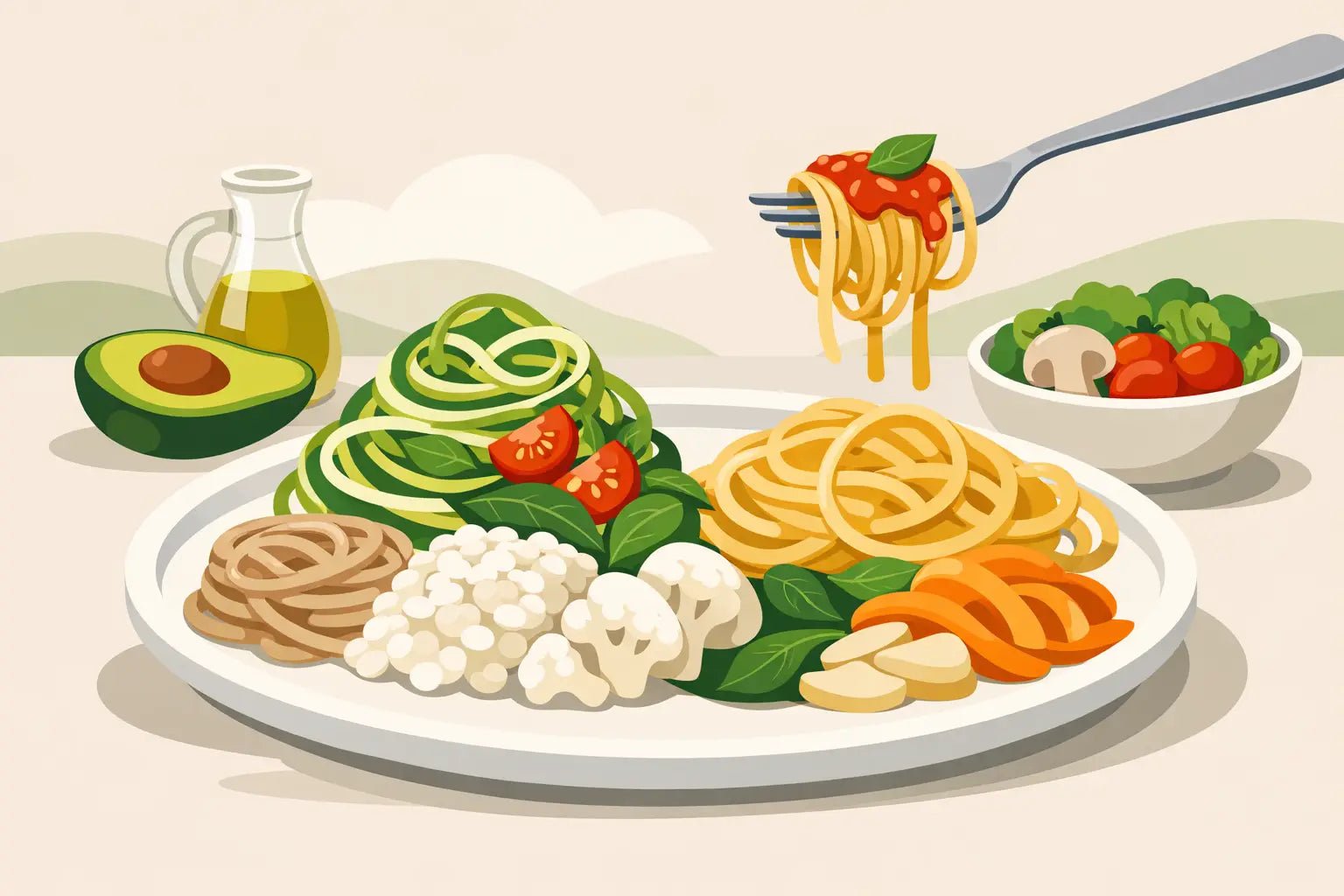
A creamy carbonara, a proper bolognese or a quick pesto bowl can still have a place on your menu when you are watching carbs. The trick is choosing low carb pasta alternatives for the meal you actually want to make, rather than expecting every option to behave exactly like wheat spaghetti. Some are brilliant at carrying rich sauces, some bring extra protein, and some are best when you want a big bowl with very few carbs.
You are not limited to watery vegetable noodles or bland substitutes. With the right preparation and a sauce that suits the base, low-carb pasta night can feel familiar, filling and genuinely easy.
What makes a pasta alternative low carb?
Traditional dried wheat pasta is built around flour, so it is naturally high in starch. Low-carb options replace that starch with ingredients such as konjac fibre, lupin flour, soy, vegetables, egg or protein-rich blends. The result can range from virtually carb-free noodles to pasta-style products with a modest carb count that still fits comfortably into many keto or LCHF approaches.
There is no single “best” option because your target matters. Strict keto eaters may prioritise the lowest possible net carbs. Others may be happy with a higher-carb, higher-protein pasta if it makes family dinners simpler or supports training. Always check the nutrition panel and serving size, particularly with products made from legumes or grains marketed as lower carb. “Lower” does not always mean keto-friendly.
Low carb pasta alternatives worth keeping in the pantry
Konjac and shirataki noodles
Konjac noodles, often called shirataki, are made largely from glucomannan fibre. They are exceptionally low in digestible carbs and calories, making them a handy choice when you want the sauce, cheese, meat or seafood to be the star of the meal.
Their texture is springy and slightly slippery, which is different from durum wheat pasta. That is not a flaw, but it does mean they shine in the right dishes. Think Thai-style curries, satay chicken, garlic prawn noodles, ramen-inspired broths and punchy stir-fries. They can also work with bolognese, provided the sauce is thick and well-seasoned.
Preparation makes a real difference. Drain them, rinse thoroughly under cold water, then dry-fry in a hot pan for a few minutes before adding sauce. This removes excess moisture and improves the bite. If you have tried konjac once and found it disappointing, this simple step may change your mind.
Lupin pasta
Lupin is a legume with an impressive nutrition profile for low-carb eaters. It is naturally high in protein and fibre while generally lower in net carbs than conventional pasta. Lupin-based pasta tends to have a firmer, more traditional pasta-like bite than konjac, making it a strong choice for hearty Italian favourites.
Use it for slow-cooked ragù, chicken and mushroom sauce, baked pasta dishes or a simple tuna, olive and tomato bowl. Its fuller texture holds up well when reheated, so it is particularly useful for meal prep lunches.
The trade-off is that lupin pasta is not carb-free, and the exact nutrition varies between brands and shapes. It also has a slightly nutty, legume-like flavour. Most people find that flavour disappears under a generous sauce, but it is worth knowing before serving it plain with only butter and parmesan.
Protein and low-carb pasta blends
Some pasta alternatives use ingredients such as soy protein, pea protein, vital wheat gluten, fibre or egg to recreate the structure of pasta with fewer carbs and more protein. These products can be useful when you want a close substitute for penne, spirals or spaghetti without relying on vegetables.
They are often the most convenient option for familiar meals. A protein pasta bake, macaroni-style cheese with cauliflower on the side, or spaghetti and meatballs can feel like a regular weeknight dinner while better matching your macro goals.
Read the label closely here. Protein content can be excellent, but carb counts differ widely. If you avoid gluten, soy or certain legumes, check the ingredient list as well as the nutrition panel. The right product is the one that suits both your dietary preferences and your daily carbohydrate budget.
Zucchini noodles and vegetable ribbons
Zucchini noodles, or zoodles, are fresh, light and easy to make with a spiraliser, julienne peeler or even a standard vegetable peeler. They are naturally low in carbs and bring colour, volume and extra vegetables to the plate.
Their biggest challenge is water. Salting zucchini and letting it sit briefly can draw out moisture, but do not overdo it or it becomes limp. For a faster option, toss the noodles in a very hot pan for one or two minutes, just until warmed through. They should stay bright and lightly crisp.
Zucchini is best with sauces that do not require a long simmer in the pan. Pesto, lemony chicken, creamy avocado sauce, chilli garlic prawns and a quick tomato sauce all work well. For a more substantial bowl, combine zoodles with a smaller serve of lupin or protein pasta rather than treating it as an all-or-nothing swap.
Spaghetti squash and cabbage noodles
Spaghetti squash separates into tender strands once cooked, with a mild sweetness that suits butter, herbs, bacon, cream and cheese. It is not as widely available year-round as zucchini in Australia, but it is worth grabbing when you see it. Roast it cut-side down until tender, then scrape the strands with a fork.
Finely shredded cabbage is another underrated option. It softens quickly in a pan, costs very little and has enough structure for Asian-style noodle dishes. Cook it with sesame oil, ginger, garlic, mince and a sugar-free sauce for a fast, satisfying bowl. It is less convincing as spaghetti with marinara, but excellent when you let it be cabbage rather than pretending otherwise.
Match the sauce to the noodle
The most successful low-carb pasta alternatives are chosen by texture, not just carb count. Konjac is ideal for wet, fragrant sauces and broths because it does not absorb much liquid. Lupin and protein pasta handle thick, slow-cooked sauces and baking. Zucchini works best with quick sauces, while spaghetti squash is lovely with creamy or buttery flavours.
A rich sauce also helps make a lower-carb meal more satisfying. Olive oil, parmesan, cream, butter, pesto, bacon, slow-cooked mince and full-flavoured sugar-free sauces bring the fat, protein and flavour that can turn a bowl of noodles into dinner. Add a simple salad or roasted greens if you want more volume without loading up on starch.
For tomato-based sauces, check added sugar. Many jarred sauces are higher in carbs than you might expect, especially when serving a very low-carb noodle. A simple sauce made with passata, garlic, herbs, olive oil and mince gives you more control. The same goes for Asian sauces: choose sugar-free or lower-sugar options where possible, then build flavour with chilli, lime, tamari, sesame and fresh herbs.
How to avoid the common texture disappointments
Most pasta substitute frustrations come from treating every option like dried spaghetti. Konjac needs rinsing and dry-frying. Vegetable noodles need minimal cooking. Lupin and protein pasta need enough water and salt during cooking, then should be tasted before draining because timing can vary by brand.
Do not drown a freshly cooked vegetable noodle in watery sauce. Reduce the sauce separately first, then toss through the noodles at the end. Likewise, do not expect a delicate zucchini ribbon to survive a long bake. If you are making a lasagne-style dish, use grilled zucchini slices or a sturdier pasta alternative instead.
Portioning still matters, even when the base is low carb. A large bowl of konjac may be low in net carbs, but if it is paired with a sauce full of hidden sugar, the numbers can climb. On the other hand, a measured serve of protein pasta with a high-protein sauce may be a better fit for your appetite and goals than a huge bowl that leaves you hunting for snacks an hour later.
Build a pasta night you will want to repeat
Keep more than one option on hand. A shelf-stable protein or lupin pasta is useful for family-style meals, while konjac noodles are ideal for quick lunches and low-carb stir-fries. Fresh zucchini gives you a lighter choice when the crisper is full, and a good sugar-free sauce means dinner can come together without overthinking it.
At Yo Keto, the range of pasta alternatives makes it easier to shop according to your preference, whether that is near-zero-carb noodles, high-protein pantry staples or ingredients for a sauce worth twirling into every forkful. Start with one dish you already love, choose the pasta base that best suits it, and give yourself permission to adjust. The goal is not to copy wheat pasta perfectly. It is to make a low-carb dinner that tastes good enough to become part of your regular rotation.