
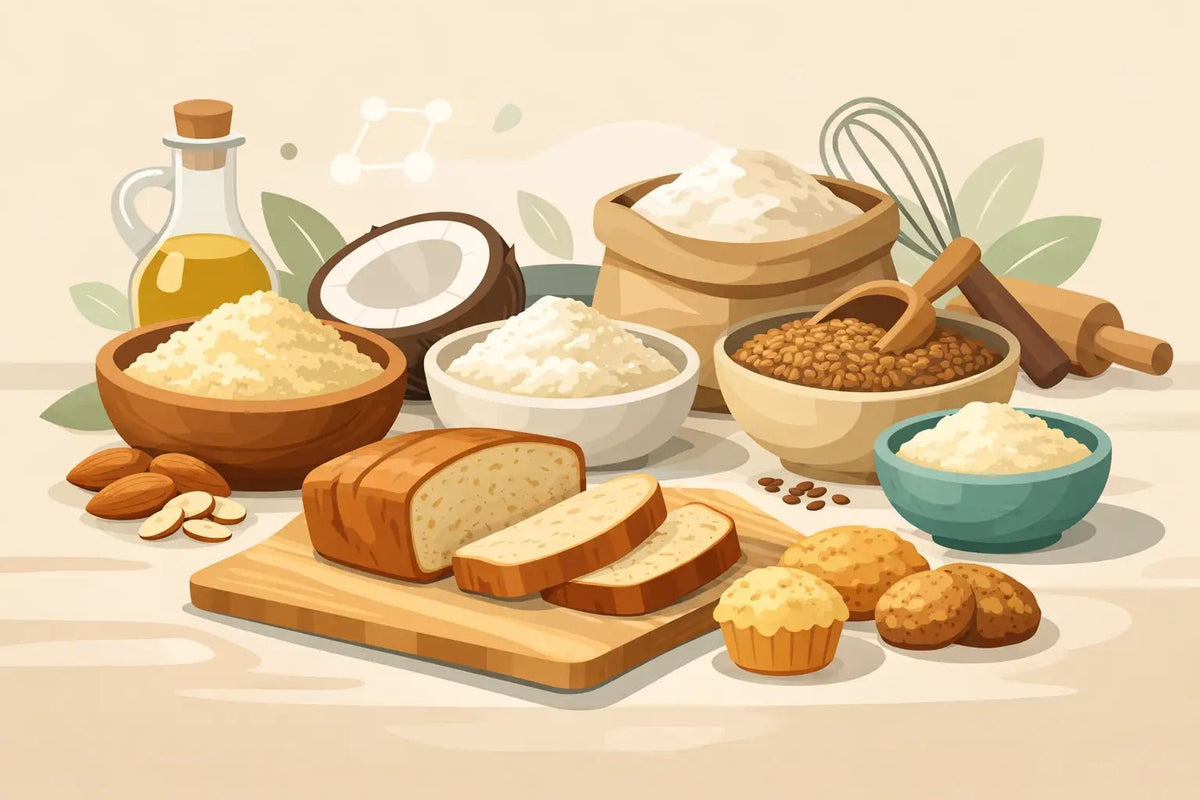
A packet labelled “gluten-free” can still be packed with starch, which is why swapping flour on keto is not as simple as grabbing the nearest alternative. If you’re wondering which flour is keto friendly, the short answer is almond flour, coconut flour and lupin flour are the most useful everyday choices. The better answer is that each behaves very differently in a recipe.
Keto baking can absolutely deliver proper brownies, birthday cakes, pancakes and savoury bread rolls. It just asks you to think about carbohydrates, absorbency and texture together. Once you know what each flour brings to the bowl, the guesswork drops away.
Which flour is keto friendly for everyday baking?
A keto-friendly flour is generally low in digestible carbohydrate and high enough in fat, fibre or protein to suit a low-carb way of eating. It also needs to work for the food you want to make. A flour that makes a brilliant tender cake may not give you the chew and structure needed for a bread roll.
When comparing products, check the nutrition panel rather than relying on front-of-pack claims. In Australia, the carbohydrate figure on a nutrition information panel generally represents available carbohydrate, with fibre listed separately. Serving size still matters, especially with nut flours and blends that may include higher-carb ingredients.
Almond flour: the dependable all-rounder
Almond flour is usually the first keto baking flour people try, and for good reason. Made from finely ground blanched almonds, it has a mild, slightly sweet flavour and a naturally rich crumb. It works beautifully in cakes, friands, muffins, pancakes, biscuits and pastry-style bases.
Its fat content keeps bakes moist, but that richness can make a recipe more delicate than one made with wheat flour. Almond flour does not contain gluten, so it benefits from eggs or a small amount of psyllium husk to hold everything together. Choose finely ground almond flour rather than coarse almond meal when you want a lighter, less grainy result.
Almond flour is not the lowest-carb option in every pantry, and it is energy-dense. That is not a problem, but it is worth factoring into your portions and daily targets. It is also unsuitable for anyone with an almond or tree-nut allergy.
Coconut flour: low-carb and seriously thirsty
Coconut flour is made from dried coconut flesh and contains plenty of fibre. It is one of the lower-carbohydrate flour options, but it cannot be swapped one-for-one with almond or wheat flour. Coconut flour absorbs a remarkable amount of liquid.
A little goes a long way. Many recipes use only a few tablespoons alongside several eggs and additional liquid. Add too much and your cake can turn dry or crumbly; use too little liquid and pancake batter can become more like a dough. Its gentle coconut flavour suits sweet baking, but it can also work in savoury recipes with confident seasoning.
For newcomers, the easiest route is to use a recipe developed specifically for coconut flour. Once you understand its absorbency, it becomes a handy staple for muffins, small cakes and quick pancakes.
Lupin flour: the high-protein option
Lupin flour is made from sweet lupin beans and has become a favourite in low-carb kitchens because it is high in protein and fibre while remaining relatively low in carbohydrate. It has a more savoury, legume-like flavour than almond or coconut flour, so it often shines in crackers, pizza bases, wraps, bread-style baking and savoury scones.
It can add a satisfying golden colour and a fuller, more bread-like feel to recipes. In sweet bakes, it usually performs best blended with almond flour, coconut flour, cocoa or warming spices rather than used on its own.
Lupin is a legume and can be an allergen for some people, particularly those with peanut allergy. If that applies to you, take the same careful approach you would with any new ingredient and follow medical advice.
Other low-carb flours worth keeping in the pantry
The best keto pantry is rarely built around one flour. A few specialised options can solve very specific baking problems, whether you want a crisp cracker, a softer loaf or extra fibre.
| Ingredient | Best for | What to know |
| --- | --- | --- |
| Flaxseed meal | Crackers, seed bread, savoury baking | Adds nuttiness, fibre and a binding quality when mixed with water. |
| Sunflower seed flour | Nut-free cakes, muffins and slices | A useful almond flour alternative, though it can react with baking soda and develop a green tint. Harmless, but surprising. |
| Sesame flour | Crackers, savoury pastry and coatings | Rich, toasty and lower-carb, with a strong sesame flavour. |
| Bamboo fibre or oat fibre | Lightening flour blends | Very high in fibre and extremely absorbent. Use small amounts in tested recipes, not as a standalone flour. |
| Psyllium husk powder | Breads, wraps and doughs | Not really a flour, but a key keto baking helper for elasticity, moisture and structure. |
Flaxseed meal deserves special mention because it can do more than add fibre. When mixed with water, it becomes gel-like and can help bind egg-free or lower-egg recipes. Its flavour is more noticeable than almond flour, so it is especially good with seeds, cheese, herbs, cinnamon or cacao.
Flours that are usually not keto friendly
Traditional wheat flour, rice flour, cornflour, tapioca starch, potato starch and cassava flour are generally too high in carbohydrate for a ketogenic approach. They may be gluten-free or marketed as natural, but that does not make them low-carb.
Oat flour and buckwheat flour can be nutritious choices for other eating styles, yet they are usually not suited to strict keto either. The same goes for many gluten-free flour blends. These often rely on rice flour and starches to mimic the stretch and softness of wheat baking.
That does not mean you need to avoid every product with a small amount of starch forever. Your carbohydrate target, serving size and personal approach matter. But for everyday keto baking, it makes sense to start with flours that are low-carb by design rather than trying to squeeze conventional flour into your macros.
How to choose the right keto flour for the recipe
Think first about the texture you are chasing. For a soft, buttery cake or a classic bikkie, almond flour is usually the most natural starting point. For a small, fluffy muffin with more fibre, coconut flour can be excellent. For a savoury loaf, crackers or a pizza-style base, a blend featuring lupin flour, flaxseed meal and psyllium often creates better structure.
Blending is where keto baking gets especially useful. Almond flour brings moisture and tenderness, while coconut flour absorbs excess liquid and helps the crumb set. Psyllium husk contributes the stretch that gluten would normally provide. A small amount of flaxseed meal can deepen flavour and improve binding. Each ingredient has a job, so changing one can alter the whole result.
If you are converting a favourite family recipe, resist the temptation to substitute cup for cup. Start with a keto-specific version instead, then adjust flavours, sweetener or mix-ins once you have a reliable base. Sweeteners also affect texture: erythritol can create a crisp finish, while allulose tends to brown and stay softer. That matters just as much as flour in cookies and cakes.
Practical tips for better low-carb baking
Measure carefully, preferably by weight. Coconut flour in particular is unforgiving when packed into a cup, while a few extra grams of psyllium can turn a soft dough firm very quickly. Let batters rest for a few minutes before baking so fibre-rich ingredients can absorb moisture properly.
Use room-temperature eggs where a recipe calls for them, and do not rush cooling. Keto cakes and breads often firm up as they cool, so slicing straight from the oven can make a perfectly good loaf seem underdone. If a batter looks much thicker than expected, add liquid gradually rather than tipping in a large amount at once.
For a simple starting pantry, almond flour, coconut flour and psyllium husk cover a lot of ground. Add lupin flour when you want more protein and savoury versatility. At Yo Keto, that gives you room to keep favourite rituals on the menu, from Sunday pancakes to a proper packed-lunch wrap, without making carbohydrate control feel like a compromise.
The right flour is the one that suits your goals and makes the food you genuinely want to eat. Start with one dependable recipe, learn how the ingredients behave, and let your keto kitchen become more confident with every batch.