
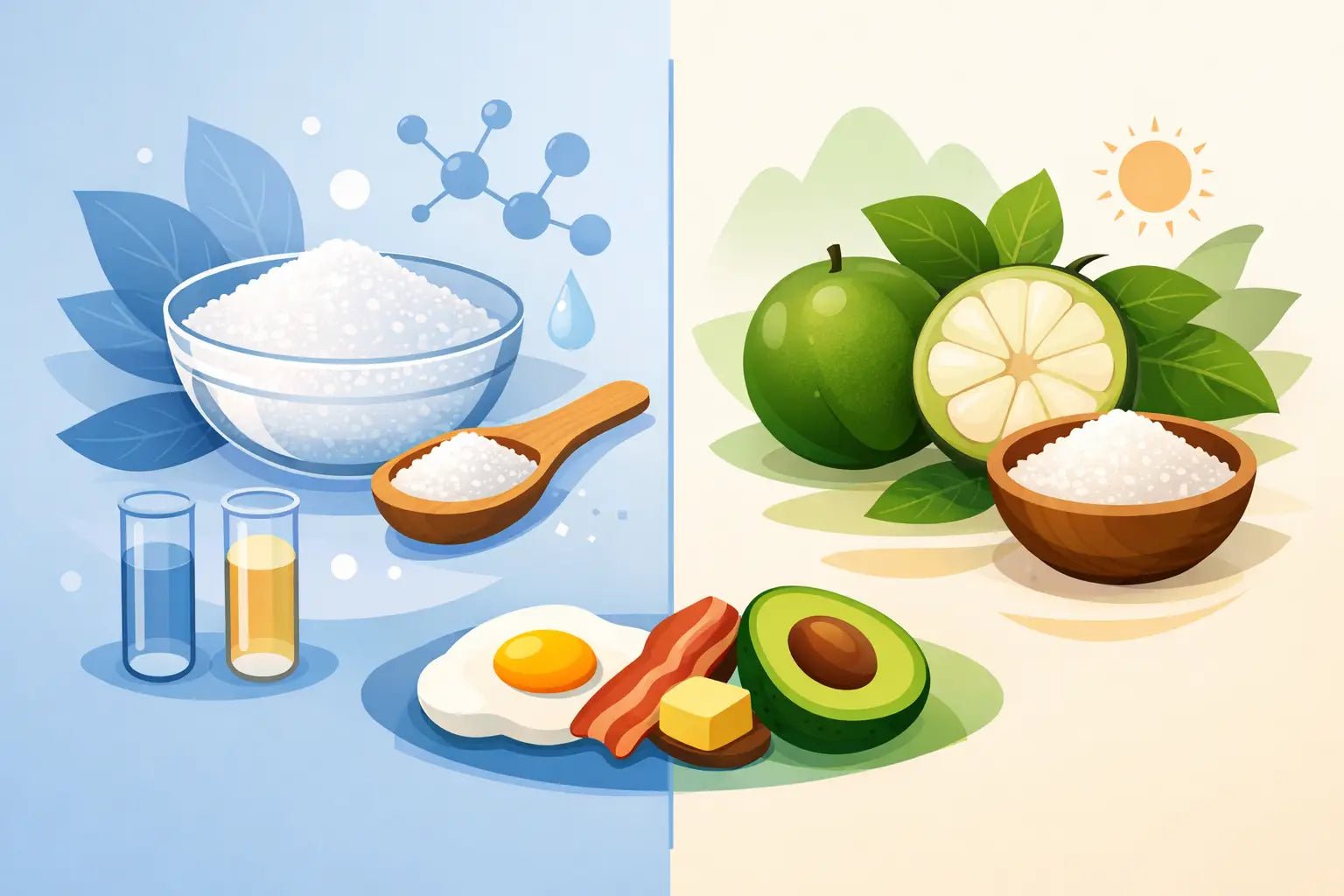
A spoonful of sweetener can make the difference between a keto routine that feels restrictive and one that still includes iced coffee, weekend baking and a proper chocolatey treat. In the allulose vs monk fruit debate, there is no single winner. Both can help you cut back on sugar, but they behave very differently in a recipe, on your palate and on an ingredient label.
If you are keeping carbs low without giving up the foods you enjoy, you are in the right place. The best choice depends on whether you need sweetness, bulk, browning, a clean finish, or simply an easy swap for the sugar bowl.
Allulose vs monk fruit at a glance
Allulose is a rare sugar that tastes and performs more like regular sugar than most low-carb sweeteners. It contains very few usable calories and is generally treated as having minimal impact on blood glucose for most people. Its sweetness is softer than table sugar, usually around 70 per cent as sweet, so recipes may need a little more of it.
Monk fruit sweetener comes from the extract of monk fruit, also called luo han guo. The sweet compounds in the fruit, mogrosides, are intensely sweet and contain virtually no sugar. Pure monk fruit extract is so concentrated that it is usually blended with another ingredient, such as erythritol, allulose, stevia or a soluble fibre, to make it practical to measure and use.
That blend is the key detail. A pack labelled monk fruit may taste, bake and digest more like its main bulk ingredient than like monk fruit itself. Always turn the packet over before adding it to your cart.
Choose allulose when texture matters
Allulose earns its place in a low-carb pantry because it does more than make food sweet. It provides bulk, helps retain moisture and can create a softer texture in baking. That makes it particularly useful in brownies, cookies, caramel-style sauces, custards and ice cream, where a tiny amount of intense sweetness alone would not do the job.
It also dissolves well in hot and cold drinks. If you want a sweetener that disappears into a flat white-style keto coffee, a lemonade or a chilled protein shake without the cooling sensation some sugar alcohols bring, allulose can be a great fit.
Its tendency to brown is a genuine advantage, but it needs a little attention. Allulose can brown faster than sugar, especially in high-heat baking. Start checking biscuits and slices earlier than you normally would, and consider lowering the oven temperature slightly if the top is colouring before the centre is ready.
The trade-off is sweetness. Because allulose is less sweet than sugar, a one-for-one cup swap may leave a recipe under-sweet unless the product has been formulated as a sugar replacement blend. For a simple syrup or a cup of tea, tasting as you go is easy. For baking, follow the pack directions first, then adjust future batches to suit your preference.
Choose monk fruit for intense sweetness
Monk fruit makes sense when you want plenty of sweetness with very little product. It is a handy option for coffee, tea, yoghurt, chia puddings, smoothies and no-bake treats. A well-balanced monk fruit blend can taste remarkably close to sugar, particularly when paired with cocoa, vanilla, cinnamon or berries.
The catch is that pure monk fruit does not bring the weight, moisture or structure that sugar supplies. If you replace sugar in a cake with a tiny pinch of pure extract, the cake may be sweet enough but still end up dry, flat or crumbly. In baking, monk fruit works best when the product is specifically designed for baking or when the recipe includes another ingredient to provide volume and tenderness.
Flavour preference matters here. Some people find monk fruit clean and neutral, while others notice a fruity, slightly herbal or lingering sweetness. That is not a sign that the product is poor quality. Taste is personal, and the blend can change the experience dramatically. If you have tried one monk fruit sweetener and did not love it, another blend may suit you far better.
Check the label, not just the front of the pack
For keto and sugar-free shoppers, the ingredient list is where the useful information lives. Monk fruit is often the headline ingredient, but its carrier may be erythritol, allulose, inulin, maltodextrin or another sweetener. These ingredients affect carbohydrate counts, texture and tolerance.
Maltodextrin is one worth watching for if you are strict with carbohydrate intake, as it can raise blood glucose despite appearing in a product marketed as low sugar. The amount in a serving may be small, but frequent use can add up. Inulin and other fibres can be useful for some people, yet may cause bloating or gut discomfort in larger amounts.
Allulose products deserve a label check too. Some are pure allulose, while others are blended to improve sweetness, reduce cost or make a cup-for-cup replacement. Neither approach is automatically better. A pure product gives you more control, while a blended product may make everyday baking easier.
The nutrition panel can be confusing because labelling rules and product formulations vary. Rather than relying only on a front-of-pack claim, check the serving size, total carbohydrate, sugars and ingredients. If you monitor ketones or blood glucose, your own response is useful information too. A sweetener that works beautifully for one keto eater may not be the favourite choice for another.
Digestive comfort is part of the decision
Both options are used by many people as part of a low-carb lifestyle, but larger serves can be uncomfortable for sensitive guts. Allulose may cause digestive upset when eaten in generous amounts, particularly if you are new to it or enjoy several allulose-sweetened treats in one sitting.
With monk fruit, the tolerance question usually comes back to the blend. If it contains erythritol, some people experience a cooling sensation or digestive discomfort, while others have no issue at all. If it contains fibre, it may be the fibre rather than the monk fruit causing the problem.
A practical approach is to introduce one new sweetener at a time. Use a modest amount for a few days before making it your go-to for baking, drinks and desserts. That gives you a clearer read on both flavour and comfort, without guessing which ingredient was responsible.
The best sweetener for common keto jobs
For a coffee or tea, monk fruit blends are ideal when you prefer a stronger sweetness from a small serve. Allulose is a lovely choice if you want a more sugar-like profile and are happy to use a little more.
For sauces, caramel-style fillings and ice cream, allulose is often the more useful starting point because it contributes body and helps with texture. Keep the heat gentle and watch it closely as it colours.
For cakes, muffins and biscuits, look for a baking blend rather than assuming every monk fruit product is interchangeable. Allulose can improve moisture and browning, while a monk fruit blend may deliver the sweetness. Many reliable low-carb recipes use more than one sweetener for precisely this reason.
For no-bake treats and chocolate-style desserts, either can work. Monk fruit is convenient for intense sweetness, while allulose helps when you need a smoother, less crystalline finish. Cocoa, nut butters, cream cheese and coconut are forgiving ingredients, so this is a great place to test what your tastebuds prefer.
Keep your keto pantry flexible
You do not need to declare allegiance to one sweetener. Allulose and monk fruit can each earn a spot in a practical keto kitchen: one for sugar-like texture and browning, the other for efficient sweetness and everyday drinks. Yo Keto shoppers often build their pantry around the foods they actually make, from weekday protein smoothies to birthday baking and a square of sugar-free chocolate after dinner.
Start with the job you want the sweetener to do, check the full ingredient list, and give yourself permission to experiment. The right choice is the one that keeps your food satisfying, your carbohydrate goals on track and your routine enjoyable enough to stick with.